About 20 minutes
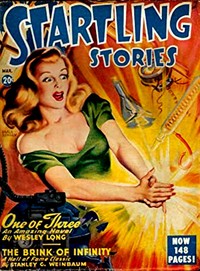
"Hey Ma, Where's Willie?" — Reading Companion
Other Worlds
4,600 recorded words. Selected by the catalog's stored reading-time estimate.
View Gutenberg source #65924
Explore this collection
Three of the shortest recorded reading commitments in this catalog. Times are estimates, not quality ratings.
About 20 minutes
Other Worlds
4,600 recorded words. Selected by the catalog's stored reading-time estimate.
View Gutenberg source #65924About 20 minutes
Other Worlds
4,541 recorded words. Selected by the catalog's stored reading-time estimate.
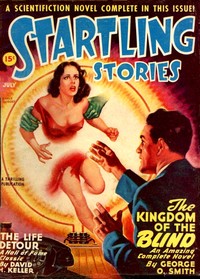
View Gutenberg source #66427About 21 minutes
Space Future
4,654 recorded words. Selected by the catalog's stored reading-time estimate.
View Gutenberg source #65668Search stored excerpts and compare books → Choose by your preferences →
Choices use stored catalog measurements. Estimates vary with reading speed. A shared category is a catalog label, not a claim that two books have the same argument or literary quality.
Search reads excerpt text stored with this catalog and links to its associated Gutenberg record. The connection is stored in the site database; this tool does not recheck that every excerpt is word-for-word identical to that external record. Excerpt search does not cover every chapter and does not verify historical publication dates.
Catalog snapshot checked: 2026-09-25. Coverage: 90 public books, 90 available source excerpts.
Independent digital catalogue
This catalogue assembles 90 public-domain science fiction works with an emphasis on historical, legal, and social themes—areas often overshadowed in genre overviews. Rather than forcing a single reading order, the organization encourages readers to enter through a question: What did early science fiction imagine about law and society? How did authors treat utopias and dystopias? The arrangement links works by theme and author, letting you move from one text to related records without altering the original source texts. Each entry includes source references and author details, supporting further exploration. Whether you start with a familiar title or a subject that interests you, the catalogue is structured to help you find adjacent works and understand their place in the broader science fiction tradition.
Subject gateways
Browse the archive by genre, time period, and document type.
Works exploring technology, imagined futures, discovery and speculative changes in society and everyday life.
A focused group of public-domain works connected by subject, literary setting and recurring questions.
A focused group of public-domain works connected by subject, literary setting and recurring questions.
Texts connected with historical lives, social customs, institutions and the worlds in which people lived.
About these records
How the collection is organized, presented and corrected.
It generally means that the represented source text is no longer protected by copyright in the applicable jurisdiction or has been released for public use. Status may vary by country and edition.
A record may include the title, author, category, cover, description, edition information, source references and available reading or download options.
A category reflects a work’s principal subjects, literary setting, source type and relationship to nearby records in the collection.
The catalogue adds navigation, metadata and editorial context. The represented source text retains its wording, edition information and rights status.
Use the contact page and include the work title, page address and the exact attribution, category, metadata or source detail requiring attention.
Catalogue stewardship
Catalogue information
AGMAK Catalogue provides direction for the digital library, which includes 90 books and 87 authors across 4 categories, ensuring collection accuracy.
Catalogue explorer
Browse existing collections, books and author records through several catalogue routes.