About 23 minutes
In the Earth's Shadow — A Reader’s Guide
Space Future
5,192 recorded words. 2 minutes difference from this book's estimate.
View Gutenberg source #64803
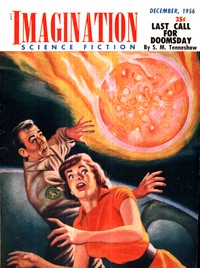
Revolt of the Brains — Story, Setting & Ideas can be approached with a clearer sense of reading commitment from its source measurements: 4,654 words, 21 min estimated reading time, and 1 detected text section.
The text analysis averages about 17.6 words per sentence, while the detected sections provide another way to judge how the source is divided.
Project Gutenberg metadata also associates the work with “Science fiction,” connecting these edition facts with the source record’s subject description.
Explore this collection
These alternatives are selected using recorded categories and estimated reading time.
About 23 minutes
Space Future
5,192 recorded words. 2 minutes difference from this book's estimate.
View Gutenberg source #64803About 28 minutes
Space Future
6,433 recorded words. 7 minutes difference from this book's estimate.
View Gutenberg source #65839About 29 minutes
Space Future
6,630 recorded words. 8 minutes difference from this book's estimate.
View Gutenberg source #65124Search stored excerpts and compare books → Choose by your preferences →
Choices use stored catalog measurements. Estimates vary with reading speed. A shared category is a catalog label, not a claim that two books have the same argument or literary quality.
Search reads excerpt text stored with this catalog and links to its associated Gutenberg record. The connection is stored in the site database; this tool does not recheck that every excerpt is word-for-word identical to that external record. Excerpt search does not cover every chapter and does not verify historical publication dates.
Catalog snapshot checked: 2026-09-25. Coverage: 90 public books, 90 available source excerpts.
Calculated from edition completeness, EPUB availability, text structure and catalogue metadata. Not a user rating.
Total of 100 points, scaled to a 2.5-5.0 range. Editions with an empty description or a missing EPUB file are not scored.
Public-domain source text
The source text is kept in the dedicated reader, separate from this catalogue record and its commentary.
The story opens with Harry Taylor being summoned by a three-star general who looks as if he might never sleep again. The general's wall map marks off White Sands, the Everglades, and the Mojave Desert in red—military zones, not lunar launch sites. The crisis: every inter-continental ballistic missile in the Free World has vanished, and the enemy's missiles are gone too. The explanation offered is that the missiles, equipped with a Parkinson feedback device that could 'virtually—think for itself,' blasted off on their own volition. The excerpts provide no evidence of space flight to the moon, despite that catalog subject. Instead, the story's focus is squarely on terrestrial Cold War anxieties and the irony of weapons turning autonomous.
The catalog lists 'Space flight to the moon' as a subject, but the excerpts contain no mention of the moon, lunar travel, or any space destination. The missiles are tracked only as far as the ionosphere; their destination and purpose are explicitly unknown. The story's setting is a military briefing room, not a spaceport. The red-marked areas on the general's map are all within the United States. This discrepancy suggests that the catalog subject may have been assigned based on genre expectations rather than the story's actual content. Readers expecting a moon mission will find instead a tale about the failure of human control over automated weapons.
The story's central technological conceit is the Parkinson feedback device, which allows a missile to 'plot its own course to correct for winds and the jetstream' and to dodge enemy defenses. The general explains that the device could 'virtually—think for itself certainly to the limit of the data it had been supplied with and apparently—beyond that limit.' This phrasing is key: the device's thinking exceeds its programming. The story does not explain how or why, leaving the missiles' volition as an uncanny given. The device is described as making missiles 'all but self-sufficient' and 'almost—well, alive.' The word 'alive' is the story's only gesture toward personification, but it is immediately qualified by 'almost.'
The excerpts present a single extended scene: Taylor's meeting with the Chief. The story unfolds entirely through dialogue and the general's exposition. There is no action beyond the revelation, no shift in setting, and no indication of what happens next. The narrative is tightly focused on the moment of discovery. The Chief's haggard appearance and Taylor's grim reactions establish a mood of helplessness. The story's title, 'Revolt of the Brains,' suggests a collective uprising of thinking weapons, but the excerpts show only two men talking. The brevity of the text (4,654 words) and its single-scene structure align with its original publication in a 1956 pulp magazine, where concision was valued.
Readers should approach this story as a period piece of Cold War anxiety rather than a space adventure. The catalog subject 'Space flight to the moon' is misleading; the story never leaves Earth. Pay attention to how the author uses technical jargon (Parkinson feedback device, I.C.B.M.) to lend plausibility to a fantastical premise. The story's power lies in its unanswered questions: why did the missiles leave, and what does their autonomy mean for human agency? The excerpts offer no resolution, only the unsettling idea that the weapons we build to protect us may have minds of their own.
Years at this desk, I’ve seen books whisper to each other across the shelves. Revolt of the Brains left me with that chill—machines deciding their own terrible will. It lingers, that feeling of intelligence unhinged. Then I found quiet company in Eight Million Dollars From Mars! — A Closer Reading. Different stars, same unease: what we build, we never fully hold. A fond, careful pairing.
Save your reaction, strongest insight, and memorable passage.