About 68 minutes
The Firing Line — Key Ideas to Explore
Space Future
15,588 recorded words. 7 minutes difference from this book's estimate.
View Gutenberg source #68001
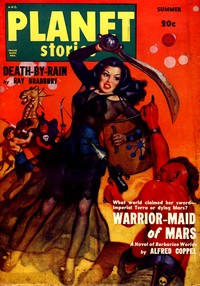
The source record for Collision Orbit — A Closer Reading measures this digital text at 14,000 words, 1 hr 1 min estimated reading time, and 2 detected text sections.
The text analysis averages about 14.5 words per sentence, while the detected sections provide another way to judge how the source is divided.
Project Gutenberg metadata also associates the work with “Science fiction,” connecting these edition facts with the source record’s subject description.
Explore this collection
These alternatives are selected using recorded categories and estimated reading time.
About 68 minutes
Space Future
15,588 recorded words. 7 minutes difference from this book's estimate.
View Gutenberg source #68001About 68 minutes
Space Future
15,593 recorded words. 7 minutes difference from this book's estimate.
View Gutenberg source #68236About 49 minutes
Space Future
11,158 recorded words. 12 minutes difference from this book's estimate.
View Gutenberg source #64782Search stored excerpts and compare books → Choose by your preferences →
Choices use stored catalog measurements. Estimates vary with reading speed. A shared category is a catalog label, not a claim that two books have the same argument or literary quality.
Search reads excerpt text stored with this catalog and links to its associated Gutenberg record. The connection is stored in the site database; this tool does not recheck that every excerpt is word-for-word identical to that external record. Excerpt search does not cover every chapter and does not verify historical publication dates.
Catalog snapshot checked: 2026-09-25. Coverage: 90 public books, 90 available source excerpts.
Calculated from edition completeness, EPUB availability, text structure and catalogue metadata. Not a user rating.
Total of 100 points, scaled to a 2.5-5.0 range. Editions with an empty description or a missing EPUB file are not scored.
Public-domain source text
The source text is kept in the dedicated reader, separate from this catalogue record and its commentary.
The story opens with a vivid, tactile description of a spaceship drive-tube blowout—the explosive pinging whistle, the floppy jolting, the sudden switch from one and a half G's to free fall. Narrator Denby knows immediately what's wrong, but the real trouble is that spaceships don't carry spare tubes; retubing is a dock job, and the nearest docks are a million miles away on Phobos. The voice is wry and self-aware, mixing technical detail with sardonic asides about spaceman rituals like smoking quabba, which he admits he doesn't even like. This opening establishes a protagonist who relies on his own wits, even when he'd rather not think at all.
Denby's narration is the story's engine. He describes the blowout with the authority of someone who has logged hours in space, but he undercuts that expertise with self-deprecating humor: he lights a quabba cigarette hoping for inspiration, only to sneeze and throw it away. The prose is lean, with short sentences that mirror the urgency of his situation. When he crawls into a bulger (space suit) to inspect the damage, the reader gets a grounded sense of the ship's cramped layout. The voice never wavers into melodrama; even when he's sweating and his stomach is pushing his tonsils around, he keeps a dry, practical tone. This consistency makes the later encounter with pirates feel earned—Denby is a man who has been in jams before, and he reacts with anger rather than panic.
The setting is established through small, telling details. The asteroid station is a place where crews are dropped off and picked up a year later—a routine that Denby improvises as a cover story. The low gravity is felt in the long leaps of the approaching men. The wrecked spacer and the tiny asteroid are introduced in the story's tagline, but the excerpts show the environment through action: the bulger, the air lock, the screens. The asteroid is not described in sweeping terms; instead, it's a backdrop for the collision of two stranded characters. The physical constraints—no spare parts, no rescue—create a pressure cooker that forces Denby to think fast, and the setting becomes a character in its own right, dictating what is possible.
When a ship claiming to be a Patrol cruiser lands, Denby's recognition of it as the Astra—his father's ship—is a turning point. The detail is specific: he had lived aboard that wagon while she was on the ways. This is not a generic reveal; it ties the present danger to a personal history. The pirates are led by a man with a gray, stony face and a voice like rocks rubbed underwater, a description that is both menacing and oddly precise. Denby's anger at the situation is immediate, but his mind slows down when facing that face. The confrontation is tense, with short lines of dialogue and a sense that violence is imminent. The excerpt ends with Denby and Betty cornered, but the reader knows that Denby's father would never have been taken alive—a hint that shapes how we read Denby's own choices.
Betty is introduced as the frightened girl of the tagline, but she quickly shows resourcefulness. When Denby yells at her to shut the lock, she throws him a startled look but springs to obey. Later, when questioned by the pirate leader, she backs Denby's lie without hesitation: 'There aren't any more. There's just the two of us.' The narrator notes that she is pale, but she does not crumble. Their dynamic is established through action rather than exposition—they are a team of two, stranded and now captured, but working together. The story does not linger on her fear; it uses her quick response to advance the plot. This partnership, forged in crisis, is a key element that the excerpts hint at but do not fully resolve.
The excerpts offer a tight, focused slice of the story: a technical problem, a mysterious arrival, and a violent takeover. Readers should pay attention to how Denby's first-person voice filters every event through his practical, slightly cynical perspective. The collision orbit of the title is both literal—the asteroid's spin—and metaphorical, as past and present converge. The story rewards attention to small details, like the quabba cigarette or the description of the pirate's face, which build a world without lengthy exposition.
There’s something about the way that pilot keeps fixing things, one practical step at a time, that reminds me of the quiet patience in Death in Transit — Background and Themes. Both feel like people just getting through, not heroes. I remember finishing it and simply sitting with the stillness for a while.
Build a private reading journal entry for this title.