About 120 minutes
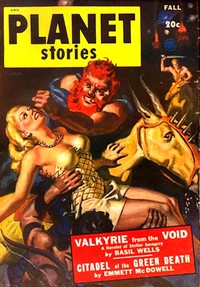
Citadel of the Green Death — Themes and Context
Space Future
27,481 recorded words. 23 minutes difference from this book's estimate.
View Gutenberg source #64755
Before opening Look to the Stars — Key Ideas to Explore, the edition data offers a quick orientation: 32,701 words, 2 hr 23 min estimated reading time, and 4 detected text sections.
The text analysis averages about 13.1 words per sentence, while the detected sections provide another way to judge how the source is divided.
Project Gutenberg metadata also associates the work with “Science fiction,” connecting these edition facts with the source record’s subject description.
Explore this collection
These alternatives are selected using recorded categories and estimated reading time.
About 120 minutes
Space Future
27,481 recorded words. 23 minutes difference from this book's estimate.
View Gutenberg source #64755About 116 minutes
Space Future
26,577 recorded words. 27 minutes difference from this book's estimate.
View Gutenberg source #66539About 68 minutes
Space Future
15,588 recorded words. 75 minutes difference from this book's estimate.
View Gutenberg source #68001Search stored excerpts and compare books → Choose by your preferences →
Choices use stored catalog measurements. Estimates vary with reading speed. A shared category is a catalog label, not a claim that two books have the same argument or literary quality.
Search reads excerpt text stored with this catalog and links to its associated Gutenberg record. The connection is stored in the site database; this tool does not recheck that every excerpt is word-for-word identical to that external record. Excerpt search does not cover every chapter and does not verify historical publication dates.
Catalog snapshot checked: 2026-09-25. Coverage: 90 public books, 90 available source excerpts.
Calculated from edition completeness, EPUB availability, text structure and catalogue metadata. Not a user rating.
Total of 100 points, scaled to a 2.5-5.0 range. Editions with an empty description or a missing EPUB file are not scored.
Public-domain source text
The source text is kept in the dedicated reader, separate from this catalogue record and its commentary.
The story opens with a queen telling her son the legend of the gods who created their world, N'urth—a mythic framework that soon gives way to a very different kind of voyage. A spaceship, crippled by an inexplicable power surge, drifts toward an unknown stellar body. The narrative voice shifts between the formal, almost biblical cadence of the legend and the terse, pragmatic dialogue of the crew, creating an early tension between ancient story and immediate crisis.
The novel juxtaposes two distinct registers. The opening legend uses compound names like Solin-Ga-Ling and Maha-Ra-Lin, and phrases such as “the heavens were rent with lightning, the seas were churned.” This elevated, almost liturgical style contrasts sharply with the crew’s exchanges: “My private opinion,” Marlin observed, “is that his instruments have no more control over this vessel than if we'd left them in that pit back on Earth.” The technical language is blunt, full of practical concerns—rations, incinerators, crowbars. This duality suggests a collision between the cosmic and the mundane, a theme that may play out in the plot.
The narrative pace is uneven, mirroring the crew’s uncertainty. Long stretches of routine are punctuated by sudden, strange events. For instance, when Pearl—a childlike character—senses a dead mouse trapped in clay and retrieves it, the scene is described in slow, almost tender detail: “She cupped both hands over the soft mass, working them below the surface almost lovingly.” Later, the mouse revives, and the pace quickens into bewildered dialogue. The point of view often stays close to Marlin, whose observations are limited and sometimes wrong. This restricted perspective keeps the reader as uncertain as the crew about the true nature of their predicament.
A sticky clay-like substance coats the ship’s exterior. It digests refuse but leaves a dead mouse intact—and later revives it. Pearl repeatedly touches the clay, murmuring “So lonely,” and seems to know where the mouse is buried. The clay appears to respond to her, suggesting a connection between the child and the alien material. The motif of loneliness recurs: Pearl says she is lonely, and the clay is described as “gummy interior substance” that flows out when cracked. The transformation of the dead mouse into a living pet hints at a larger pattern of change, perhaps tied to the planet they approach. These details are left unexplained in the excerpts, inviting speculation about the clay’s origin and purpose.
Readers should pay close attention to the interplay between the mythic prologue and the spacefaring narrative. The legend of gods and the ship’s journey may be more than parallel—they might converge. Also note how the clay behaves inconsistently: it digests some objects but preserves others. This selective property, and Pearl’s affinity for it, could be key to understanding the story’s resolution.
Sometimes the loneliest thing in the universe isn’t the void, but the space between what we remember and what we can’t let go of. That ache haunted me through Look to the Stars, and it lingered again while rereading Eight Million Dollars From Mars! — A Closer Reading. Strange, how a gambler’s quiet gamble can feel as vast as any planet, and just as unforgiving.
A brief reflection can help important ideas stay with you longer.