About 120 minutes
Citadel of the Green Death — Themes and Context
Space Future
27,481 recorded words. 4 minutes difference from this book's estimate.
View Gutenberg source #64755
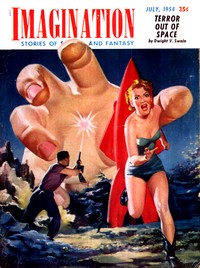
The source record for The Terror Out of Space — Context and Discussion measures this digital text at 26,577 words, 1 hr 56 min estimated reading time, and 3 detected text sections.
The text analysis averages about 10.8 words per sentence, while the detected sections provide another way to judge how the source is divided.
Project Gutenberg metadata also associates the work with “Science fiction,” connecting these edition facts with the source record’s subject description.
Explore this collection
These alternatives are selected using recorded categories and estimated reading time.
About 120 minutes
Space Future
27,481 recorded words. 4 minutes difference from this book's estimate.
View Gutenberg source #64755About 143 minutes
Space Future
32,701 recorded words. 27 minutes difference from this book's estimate.
View Gutenberg source #65075About 68 minutes
Space Future
15,588 recorded words. 48 minutes difference from this book's estimate.
View Gutenberg source #68001Search stored excerpts and compare books → Choose by your preferences →
Choices use stored catalog measurements. Estimates vary with reading speed. A shared category is a catalog label, not a claim that two books have the same argument or literary quality.
Search reads excerpt text stored with this catalog and links to its associated Gutenberg record. The connection is stored in the site database; this tool does not recheck that every excerpt is word-for-word identical to that external record. Excerpt search does not cover every chapter and does not verify historical publication dates.
Catalog snapshot checked: 2026-09-25. Coverage: 90 public books, 90 available source excerpts.
Calculated from edition completeness, EPUB availability, text structure and catalogue metadata. Not a user rating.
Total of 100 points, scaled to a 2.5-5.0 range. Editions with an empty description or a missing EPUB file are not scored.
Public-domain source text
The source text is kept in the dedicated reader, separate from this catalogue record and its commentary.
Dwight V. Swain opens The Terror Out of Space with a negotiation that immediately establishes the story's economic stakes: ten thousand credits, a five percent cut, and a race against the Cartel. The dialogue is terse and transactional, with characters speaking in clipped sentences that reveal power dynamics through interruptions and gestures—a glass clicked down like a period, a grin offered 'after a fashion.' Swain builds the setting through sensory details: the throb of atmosphere compressors, the scent of thes-wood flares and Martian paggod, the rattle of surface carriers. This is a world where alien life is mundane—a moss-furred Callistan crustach on a cadet's shoulder, a flipper-tentacled coddob led by a chain through its gill-slits. The prose favors concrete nouns and active verbs, grounding the science fiction in physical immediacy.
Swain's dialogue is a study in verbal economy. Characters rarely say more than necessary, and their word choices signal status and intent. When Terral offers Boone a contract, he 'ticked off the points on his fingers,' a gesture of control. Boone's refusal is equally clipped: 'Sorry, Terral.' The negotiation escalates through repetition—'Fifteen thousand, then. And ten per cent'—until Terral accuses, 'Then it is the woman!' The accusation lands with a 'spark of pale fire' behind his eyes. Swain uses verbs of impact: Boone brings his glass down 'just hard enough so that it clicked a curt, sharp period to the other's sentence.' Later, Krobis speaks in 'tight, familiar' tones, his voice 'clipped' and 'sneering.' The language of the Cartel is bureaucratic—'disciplinary discharge,' 'special session of the board'—contrasting with the raw physicality of Boone's escape. This tension between corporate jargon and visceral action drives the narrative forward.
Swain constructs Gandor City not through exposition but through a barrage of sensory impressions. The night closes in with 'alien sounds and smells and stir.' A cadet pushes past with a 'moss-furred Callistan crustach' on his shoulder; prospectors lead a 'lumbering flipper-tentacled coddob by a chain run through its gill-slits.' The atmosphere compressors throb 'like a giant heartbeat,' while surface carriers rattle and tricol pipes wail. Smells are specific: 'a sweetish, slightly nauseous scent of thes-wood flares and Martian paggod' from a grill advertising 'Genuine Earth Meats—No Synthetics, No Alien Substitutes!' The sign itself is a worldbuilding detail, implying a market where synthetic and alien foods are common. Swain avoids lengthy descriptions; instead, he layers concrete nouns—crustach, coddob, thes-wood, paggod—to create a sense of lived-in strangeness. The effect is immersive without being explanatory.
Boone's escape from the guardhouse is a set piece that showcases Swain's emphasis on physicality. The scene is built from precise movements: Boone climbs onto the bunk, loops a torn cloth noose through a ventilator grating, twists his collar, and steps off. The noose cuts his neck, but his weight hangs from an extra loop under his arms. Swain describes the mechanics of the fake hanging in detail—'the turned-up collar made it look like he was truly hanging by his neck alone.' When Krobis enters, Boone 'twisted his head to an appropriate angle' and 'let himself swing limp.' The rescue is equally physical: hands lift him, a knife hacks at the noose, fabric rips. Boone's counterattack is a single, explosive movement: 'he drove his elbow deep into his enemy's unprotected midriff.' The prose mirrors the action—short, staccato sentences that accelerate the pace. Swain trusts the reader to follow the choreography without over-explaining.
A recurring motif in the excerpts is the recording—a device that captures speech and can be used as evidence. Krobis reveals he has a recording of Boone's conversation with Terral, which he plans to use to secure a conviction. 'The recording makes your conviction certain,' he says. This introduces a layer of paranoia: words spoken in private can be weaponized. Swain underscores this through Boone's reaction—'For the fraction of a second, Boone stopped breathing. His lips were all at once so stiff he couldn't speak.' The recording is a plot mechanism, but it also reflects the story's concern with voice and control. Characters speak in guarded phrases, aware that their words may be monitored. The dialogue is full of half-truths and withheld information. Even Boone's escape relies on a silent performance—he feigns death, letting his body speak for him. In a world where every word can be recorded, action becomes the only reliable communication.
Swain's prose rewards attention to small details: the way a character's smile is 'crooked,' the specific alien creatures named without explanation, the physical weight of a glass set down too hard. The story moves at a brisk pace, but the language invites rereading for its craft. Readers who enjoy mid-century science fiction with a hard-boiled edge—where dialogue drives plot and setting is built from sensory fragments—will find Swain's work a compact, efficient example of the form.
Reading Swain’s The Terror Out of Space, I kept thinking about that moment when Boone realizes the planet’s silent pull is less a weapon than a weight he’s carried all along. It reminded me of another tale about leaving familiar gravity behind. There’s a softer ache in Voyage to Procyon — Key Ideas to Explore, like watching a star from a porch at dusk—no rush, just distance doing its quiet work.
Create a short personal record of your experience with this book.