About 21 minutes
Revolt of the Brains — Story, Setting & Ideas
Space Future
4,654 recorded words. 2 minutes difference from this book's estimate.
View Gutenberg source #65668
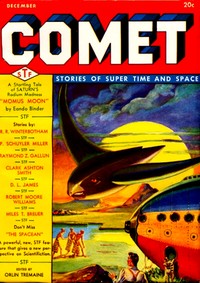
In the Earth's Shadow — A Reader’s Guide can be approached with a clearer sense of reading commitment from its source measurements: 5,192 words, 23 min estimated reading time, and 1 detected text section.
The text analysis averages about 15.4 words per sentence, while the detected sections provide another way to judge how the source is divided.
Project Gutenberg metadata also associates the work with “Science fiction,” connecting these edition facts with the source record’s subject description.
Explore this collection
These alternatives are selected using recorded categories and estimated reading time.
About 21 minutes
Space Future
4,654 recorded words. 2 minutes difference from this book's estimate.
View Gutenberg source #65668About 28 minutes
Space Future
6,433 recorded words. 5 minutes difference from this book's estimate.
View Gutenberg source #65839About 29 minutes
Space Future
6,630 recorded words. 6 minutes difference from this book's estimate.
View Gutenberg source #65124Search stored excerpts and compare books → Choose by your preferences →
Choices use stored catalog measurements. Estimates vary with reading speed. A shared category is a catalog label, not a claim that two books have the same argument or literary quality.
Search reads excerpt text stored with this catalog and links to its associated Gutenberg record. The connection is stored in the site database; this tool does not recheck that every excerpt is word-for-word identical to that external record. Excerpt search does not cover every chapter and does not verify historical publication dates.
Catalog snapshot checked: 2026-09-25. Coverage: 90 public books, 90 available source excerpts.
Calculated from edition completeness, EPUB availability, text structure and catalogue metadata. Not a user rating.
Total of 100 points, scaled to a 2.5-5.0 range. Editions with an empty description or a missing EPUB file are not scored.
Public-domain source text
The source text is kept in the dedicated reader, separate from this catalogue record and its commentary.
The story opens with Ferris in the station's cupola, admiring Earth's immense sphere, when a bell signals a call from company head Galsworth. The setting is immediately established as a lonely outpost—a 'cylindrical island of space'—where Ferris has served six years. The narrative voice shifts between Ferris's indignant thoughts and clipped dialogue, revealing his resentment at being replaced by a 'green kid.' The arrival of a stranger with a stone-like face and a holstered hand quickly derails the expected handover, introducing a threat that transforms the station from a workplace into a trap.
The story's physical setting is confined almost entirely to the fuel station's interior: a control room, living quarters, and cupola. Chapman uses these tight spaces to mirror Ferris's psychological state. The station is described as a 'cylindrical island' and a 'dismal existence,' yet Ferris calls it home. The contrast between the vast Earth-Moon void outside and the cramped metal rooms inside creates a sense of claustrophobia. Ferris's routine—watching ships 'approach and pass in the cold void'—is broken only by the bell and the hiss of the airlock. The stranger's entrance is marked by a ripped tunic and a direct demand for fuel, shifting the station from a place of transit to a stage for confrontation.
Ferris's long tenure is the emotional anchor of the story. He has kept the company 'above water' and considers himself indispensable. The replacement order from Galsworth is delivered without explanation, and Ferris's reaction—pacing, picturing Galsworth 'chewing a big cigar'—shows his frustration. The narrative implies that Ferris has internalized the station's isolation; he thinks of Brooks growing weary of the job 'just as Ferris had at first.' This suggests a cycle of loneliness that the company disregards. The stranger's arrival interrupts Ferris's packing, and the reader is left to wonder whether the replacement is a cover for a larger scheme or a genuine administrative decision.
Chapman uses short, functional dialogue to advance the plot and reveal character. Galsworth's lines are curt and dismissive: 'Replacement will be in effect within ten hours.' Ferris's responses are defensive and incredulous. The stranger speaks in clipped commands: 'I need fuel for my ship—a lot of it.' The contrast between the bureaucratic tone of the company and the direct threat of the stranger heightens the stakes. Ferris's internal monologue, however, is more expansive, filling in his backstory and emotional state. This split between spoken brevity and internal rumination gives the story a layered texture, where what is said is less important than what is left unsaid.
The story's structure is built on a series of movements: from the cupola to the control room, to the living quarters, and back to the control room for the stranger's arrival. Each shift is triggered by an external event—the bell, the airlock hiss—and each reveals a new piece of information. The pacing is deliberate; Ferris's packing is interrupted, and the narrative lingers on his thoughts before the stranger appears. The final movement, from the control room to the airlock, is implied but not shown in the excerpts. This pattern of interruption and relocation keeps the reader off-balance, mirroring Ferris's loss of control over his own departure.
Readers should pay attention to how Chapman uses the station's physical layout to reflect Ferris's isolation and vulnerability. The recurring image of Earth 'above' him, visible from the cupola, reinforces his detachment from the planet he once called home. The story's brevity—under 5,200 words—means every detail, from the ripped tunic to the holstered hand, carries weight. Consider how the stranger's arrival might be connected to the unexplained replacement, and whether Ferris's six years of service have prepared him for this encounter.
It’s odd how a station’s humming quiet can feel like both a cage and a comfort, and I found myself thinking of that while rereading the guide. There’s a particular loneliness to being asked to leave a place you’ve come to know by heart. The Impossible Pirate — Themes and Context touches something similar, though from a different angle.
Save your reaction, strongest insight, and memorable passage.