About 45 minutes
The Fifty-Fourth of July — Reading Companion
Space Future
10,209 recorded words. 0 minutes difference from this book's estimate.
View Gutenberg source #66288
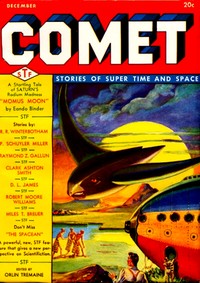
This digital edition of Tickets to Paradise — Story, Setting & Ideas is described by source-level measurements including 10,285 words, 45 min estimated reading time, and 1 detected text section.
The text analysis averages about 15.5 words per sentence, while the detected sections provide another way to judge how the source is divided.
Project Gutenberg metadata also associates the work with “Science fiction,” connecting these edition facts with the source record’s subject description.
Explore this collection
These alternatives are selected using recorded categories and estimated reading time.
About 45 minutes
Space Future
10,209 recorded words. 0 minutes difference from this book's estimate.
View Gutenberg source #66288About 43 minutes
Space Future
9,722 recorded words. 2 minutes difference from this book's estimate.
View Gutenberg source #64874About 48 minutes
Space Future
10,874 recorded words. 3 minutes difference from this book's estimate.
View Gutenberg source #65086Search stored excerpts and compare books → Choose by your preferences →
Choices use stored catalog measurements. Estimates vary with reading speed. A shared category is a catalog label, not a claim that two books have the same argument or literary quality.
Search reads excerpt text stored with this catalog and links to its associated Gutenberg record. The connection is stored in the site database; this tool does not recheck that every excerpt is word-for-word identical to that external record. Excerpt search does not cover every chapter and does not verify historical publication dates.
Catalog snapshot checked: 2026-09-25. Coverage: 90 public books, 90 available source excerpts.
Calculated from edition completeness, EPUB availability, text structure and catalogue metadata. Not a user rating.
Total of 100 points, scaled to a 2.5-5.0 range. Editions with an empty description or a missing EPUB file are not scored.
Public-domain source text
The source text is kept in the dedicated reader, separate from this catalogue record and its commentary.
The story opens with a railroad construction man waiting at Bandar Shahpur on the Persian Gulf, a setting that immediately grounds the narrative in a specific time and place. The narrator's colloquial voice—'I'm a railroad construction man'—establishes a practical, no-nonsense perspective that contrasts with the fantastic elements to come. Dr. Champ Chadwick, an archaeologist, appears 'out of nowhere,' and their conversation reveals a quest for the Ice Stone, a legendary black block that traps anyone who touches it. The catalog subjects list 'Time travel -- Fiction' and 'Archaeologists -- Fiction,' and the excerpts confirm that the Ice Stone is indeed a time warp, leading to a future where a robot named Eyoaoc Eiioiei and a character named Rog Tanlu await.
The narrator's voice is the story's most distinctive feature. He speaks in a direct, unpretentious manner, using phrases like 'I began to catch on that he was one of those guys who dig up ruins and things.' This vernacular style, reminiscent of pulp adventure fiction, creates an immediate sense of authenticity. The setting at Bandar Shahpur, a real port in Iran, is described with specific details: 'the inlet Khor Musa of the Persian Gulf.' The narrator's occupation as a railroad construction man ties him to the region's modernization, a theme echoed in Dr. Chadwick's comment that 'this railroad has opened things up.' The excerpts show that the story uses its Iranian setting not as mere backdrop but as a source of historical depth, with Chadwick noting that 'this country is full of ruins' and that 'everything that can happen has already happened here.'
The Ice Stone is introduced as a legend: 'a huge, square block, set in the side of a mountain' that traps those who touch it. Dr. Chadwick describes it as a 'time warp, a pathway through 500,000 years,' and the excerpts confirm that it functions as a portal to a future where a robot named Eyoaoc Eiioiei and a humanoid named Rog Tanlu exist. The robot is described in vivid, unsettling detail: 'a madhouse thing prancing on two jointed-metal legs, as thick as stovepipes, its eyes glinting ruby-red.' Its head 'wasn't attached in any visible manner to its short, squat body, but seemed to float.' This future world involves a conflict over the sale of 'tickets' to paradise, though the excerpts do not fully explain this concept. The time travel element is thus not a journey to the past but to a distant future, aligning with the catalog subject 'Time travel -- Fiction.'
The narrator repeatedly expresses reluctance to get involved in the conflict. When Dr. Chadwick decides to help Rog Tanlu against 'an armed band of Marc's vassals,' the narrator thinks, 'I thought he was wrong. That fight—if there was going to be a fight—wasn't ours.' He admits, 'I still think so!' This persistent doubt creates a tension between the narrator's pragmatic self-interest and the adventure plot's demands. The excerpts show that the narrator is out of his depth, facing 'fountain-pen affairs' (advanced weapons) and a robot that 'was just as amazed and curious as I was.' This moral ambiguity—where the protagonist questions the heroics—is unusual for pulp science fiction and gives the story a reflective edge. The narrator's voice remains consistent throughout, grounding the fantastic events in a relatable, skeptical perspective.
The excerpts provide a clear sense of the story's opening and middle, but the resolution—whether the narrator and Dr. Chadwick survive, what the 'tickets to paradise' entail, and how the Ice Stone's time travel mechanics fully operate—remains unknown. Readers should pay attention to how the narrator's voice shapes the story's tone and whether his initial reluctance proves justified. The interplay between the mundane setting of 1940s Iran and the futuristic elements of robots and time warps is the story's central tension.
Somewhere between the dust of that Iranian railway and the hum of Eyoaoc’s warning, there’s a loneliness that sticks with you—the feeling of being out of step with your own time. I found myself thinking about that quiet ache afterward, and it led me back to Look to the Stars — Key Ideas to Explore, which sits with that same wondering, almost gently, like a hand on your shoulder.
Answer a few questions and save a private reflection on this device.