About 116 minutes
The Terror Out of Space — Context and Discussion
Space Future
26,577 recorded words. 4 minutes difference from this book's estimate.
View Gutenberg source #66539
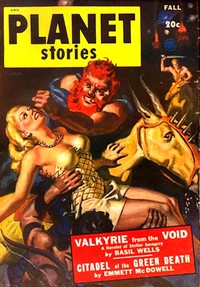
The catalog record for Citadel of the Green Death — Themes and Context provides practical reading context through 27,481 words, 2 hr estimated reading time, and 4 detected text sections.
The text analysis averages about 9.2 words per sentence, while the detected sections provide another way to judge how the source is divided.
Project Gutenberg metadata also associates the work with “Science fiction,” connecting these edition facts with the source record’s subject description.
Explore this collection
These alternatives are selected using recorded categories and estimated reading time.
About 116 minutes
Space Future
26,577 recorded words. 4 minutes difference from this book's estimate.
View Gutenberg source #66539About 143 minutes
Space Future
32,701 recorded words. 23 minutes difference from this book's estimate.
View Gutenberg source #65075About 68 minutes
Space Future
15,588 recorded words. 52 minutes difference from this book's estimate.
View Gutenberg source #68001Search stored excerpts and compare books → Choose by your preferences →
Choices use stored catalog measurements. Estimates vary with reading speed. A shared category is a catalog label, not a claim that two books have the same argument or literary quality.
Search reads excerpt text stored with this catalog and links to its associated Gutenberg record. The connection is stored in the site database; this tool does not recheck that every excerpt is word-for-word identical to that external record. Excerpt search does not cover every chapter and does not verify historical publication dates.
Catalog snapshot checked: 2026-09-25. Coverage: 90 public books, 90 available source excerpts.
Calculated from edition completeness, EPUB availability, text structure and catalogue metadata. Not a user rating.
Total of 100 points, scaled to a 2.5-5.0 range. Editions with an empty description or a missing EPUB file are not scored.
Public-domain source text
The source text is kept in the dedicated reader, separate from this catalogue record and its commentary.
The novel opens in a courtroom where Joel Hakkyt, already convicted, awaits a psychologist's verdict. The scene immediately establishes a world where maladjustment is a capital offense: Joel is sentenced to an Experimental Station, a fate likened to Roman gladiators. His family's coldness—his father's stony silence, his wife's clinical note-taking—underscores a society that pathologizes individuality. The prose is brisk, favoring action over introspection, and the dialogue carries an edge of bureaucratic menace. Readers should note how quickly the setting shifts from Earth's sterile justice to Asgard's brutal colony, a transition that signals the story's interest in systemic oppression rather than personal psychology.
The opening trial scene does more than introduce Joel Hakkyt; it encapsulates the power structures that drive the plot. The psychologist's verdict—'completely maladjusted'—is delivered without appeal, and Joel's father, a community president, is powerless to intervene. The wife's detached note-taking, 'jotting down his reactions,' suggests a world where human relationships are subordinated to social control. This cold efficiency recurs in the Experimental Station, where prisoners are 'guinea-pigs' for scientists. The reader is primed to see Asgard not as a break from Earth but as a continuation of its logic: the colony's slave market and police state are merely more explicit versions of the same system.
When Priscilla Cameron appears at the slave block, her performance is layered. She taunts Joel with a 'defiant green hair' and a 'slim cool arrogance,' yet her eyes betray 'fear and appeal.' The narrative withholds her motives, but her actions—buying Joel, ordering the release of Tamis Ravitz—suggest a covert agenda. The major-domo's silent warning about the fluorescing tattoo deepens this ambiguity. Readers should track Priscilla's gestures and the reactions of those around her; the text hints at a resistance network without confirming it. Her panic when Tamis vanishes, and Roos's hardened compliance, imply that she operates under constant surveillance.
The excerpts offer vivid details that build Asgard's texture. The slave block is 'like the cattle sheds at a fair,' and the planters study prisoners with a 'good natured holiday air.' Priscilla's home is a 'towering plastic structure in the style of the symbolists,' and the major-domo wears a 'white slave tunic.' These details are not decorative; they reinforce the colony's hierarchy. The fluorescing tattoo—a mark that can be activated or silenced—is a particularly telling device, linking identity to surveillance. The 'microweb' fabric of Priscilla's clothing and the 'jeweled paralyzer' at Roos's belt further establish a setting where technology is both everyday and coercive.
McDowell's prose is efficient, favoring short paragraphs and rapid scene shifts. Dialogue carries much of the exposition, as in the trial's verdict or the slave-market banter. The narrative voice is neutral, rarely pausing for interiority; Joel's emotions are conveyed through physical reactions—'white-lipped with fury'—rather than extended reflection. This pace suits the adventure format, but it also creates a sense of relentless pressure. The reader is given little time to breathe, mirroring Joel's own lack of agency. The occasional simile—'like a painting of Psyche by Boucher'—stands out against the otherwise stark language, hinting at a wider cultural reference that the story does not elaborate.
These excerpts reward attention to small gestures and offhand details. The major-domo's yawn, the tattoo's glow, Priscilla's frozen stare—each may signal larger patterns. The novel does not explain its world upfront; instead, it trusts the reader to infer rules from behavior. A first reading benefits from noting who speaks, who silences, and who watches. The story's momentum depends on these cues, and its pleasures lie in deciphering them.
That opening trial scene in Citadel of the Green Death stayed with me—the quiet cruelty of it, how a diagnosis becomes a sentence. It reminded me of something similar in Space Blackout — Reading Companion, that same hush before resistance finds its voice. I keep thinking about that tattoo, glowing like a promise nobody explained.
Your answers remain private and are stored only in this browser.