About 31 minutes
You'll Like It on Mars — Background and Themes
Space Future
6,957 recorded words. 1 minutes difference from this book's estimate.
View Gutenberg source #65122
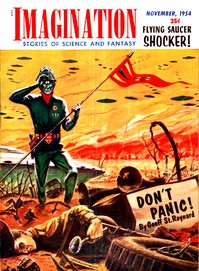
The catalog record for Eight Million Dollars From Mars! — A Closer Reading provides practical reading context through 6,804 words, 30 min estimated reading time, and 1 detected text section.
The text analysis averages about 19.2 words per sentence, while the detected sections provide another way to judge how the source is divided.
Project Gutenberg metadata also associates the work with “Science fiction,” connecting these edition facts with the source record’s subject description.
Explore this collection
These alternatives are selected using recorded categories and estimated reading time.
About 31 minutes
Space Future
6,957 recorded words. 1 minutes difference from this book's estimate.
View Gutenberg source #65122About 29 minutes
Space Future
6,630 recorded words. 1 minutes difference from this book's estimate.
View Gutenberg source #65124About 31 minutes
Space Future
7,099 recorded words. 1 minutes difference from this book's estimate.
View Gutenberg source #65374Search stored excerpts and compare books → Choose by your preferences →
Choices use stored catalog measurements. Estimates vary with reading speed. A shared category is a catalog label, not a claim that two books have the same argument or literary quality.
Search reads excerpt text stored with this catalog and links to its associated Gutenberg record. The connection is stored in the site database; this tool does not recheck that every excerpt is word-for-word identical to that external record. Excerpt search does not cover every chapter and does not verify historical publication dates.
Catalog snapshot checked: 2026-09-25. Coverage: 90 public books, 90 available source excerpts.
Calculated from edition completeness, EPUB availability, text structure and catalogue metadata. Not a user rating.
Total of 100 points, scaled to a 2.5-5.0 range. Editions with an empty description or a missing EPUB file are not scored.
Public-domain source text
The source text is kept in the dedicated reader, separate from this catalogue record and its commentary.
Winston Marks's 1954 short story opens with a precise, almost clinical description of a criminal's composure: Pauker crosses a concourse with 'arms swinging freely, eyes straight ahead,' trailed by a robot luggage-carrier. The narrative immediately establishes his wealth—eight million dollars in interplanetary bills—and his vulnerability, as the heavy leather bags draw attention. The story's tension hinges on small details: the excess baggage fee of $4,175, the X-ray customs check, and Pauker's nervous reaction to a casual remark. These early passages ground the science-fiction premise in concrete, mundane anxieties about travel and concealment.
The first excerpt introduces Pauker as a man of controlled movements and acute paranoia. Marks builds suspense through the protagonist's internal calculations: he knows that 'legitimate people don't haul bundles of $1,000 interplanetary bills around with them.' The robot luggage-carrier, the 'bone' homing device, and the prep-building for spaceflight are sketched without exposition, trusting the reader to infer the setting. The attendant's remark about leather bags triggers Pauker's fear of detection, and the story's pacing slows to match his anxious scrutiny of every interaction. This opening establishes a pattern of psychological tension that will dominate the narrative.
The middle excerpt shifts abruptly from external threat to internal torment. Pauker realizes he received a double dose of drug injection in 'booth number seven,' causing an excessive thermal lag. Marks describes the physical sensations in visceral detail: 'the chill rippled up from his groin, raised the hackles of his neck-hair and diffused into his limbs like a gelid syrup.' The story becomes a catalog of suffering—coughing, hunger, thirst, itching, fever, pleurisy pains—as Pauker's body rebels against the malfunctioning suspended animation. The narrative voice remains detached, even clinical, while the protagonist's consciousness narrows to a desperate struggle for survival. The miniature chronometer reading 'only an absurd ten days, six hours and fourteen minutes' underscores the discrepancy between subjective agony and objective time.
The final excerpt introduces the Marsfield Surgeon-General, who exclaims at Pauker's survival. This brief glimpse suggests a shift in perspective, from the confined, suffering viewpoint of the protagonist to an external, professional assessment. The surgeon's astonishment implies that Pauker's ordeal was extraordinary even by the standards of this future setting. The excerpt leaves unresolved how Pauker's criminal past and the eight million dollars will intersect with his medical rescue. The story's structure thus moves from a tight, paranoid opening through a prolonged physical trial to a sudden external evaluation, creating a rhythm of isolation and intrusion.
Throughout the excerpts, Marks anchors the speculative elements in concrete numbers and physical details. The title's eight million dollars recurs in Pauker's thoughts and in the excess baggage fee. The weight of the leather bags, the 100-pound limit, and the $4,175 charge all emphasize the materiality of wealth in transit. Later, the chronometer's precise reading—'ten days, six hours and fourteen minutes'—contrasts with Pauker's distorted perception of time. These recurring measurements ground the story's psychological and physical extremes in a world of quantifiable risks and costs. The robot luggage-carrier and the 'bone' homing device are introduced without explanation, functioning as natural elements of the setting rather than marvels.
Readers should pay attention to how Marks uses the protagonist's limited perspective to generate suspense. The story withholds information about the broader world, focusing instead on Pauker's immediate sensations and calculations. The shift from external threat (customs, detection) to internal crisis (thermal lag, disease) mirrors the trajectory of many mid-century science-fiction tales that explore the vulnerabilities of the human body in space. The excerpts suggest a tight, efficient narrative that rewards attention to small details and the protagonist's flawed reasoning.
That Pauker story stayed with me like a bruise—how a man can buy distance but not escape his own body. It made me think of another one I read, where the same loneliness creeps in at thirty thousand feet. Skid Row Pilot — A Closer Reading has that same quiet ache, a pilot circling his own mistakes, no ground to land on. Just that, softly. I keep turning it over.
Use these questions to collect your thoughts before moving on.