About 40 minutes
The Brave Walk Alone — Background and Themes
Space Future
9,041 recorded words. 0 minutes difference from this book's estimate.
View Gutenberg source #65069
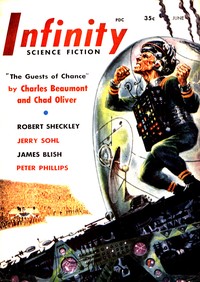
The source record for Death in Transit — Background and Themes measures this digital text at 9,171 words, 40 min estimated reading time, and 1 detected text section.
The text analysis averages about 14.2 words per sentence, while the detected sections provide another way to judge how the source is divided.
Project Gutenberg metadata also associates the work with “Science fiction,” connecting these edition facts with the source record’s subject description.
Explore this collection
These alternatives are selected using recorded categories and estimated reading time.
About 40 minutes
Space Future
9,041 recorded words. 0 minutes difference from this book's estimate.
View Gutenberg source #65069About 39 minutes
Space Future
8,852 recorded words. 1 minutes difference from this book's estimate.
View Gutenberg source #66313About 39 minutes
Space Future
8,846 recorded words. 1 minutes difference from this book's estimate.
View Gutenberg source #66572Search stored excerpts and compare books → Choose by your preferences →
Choices use stored catalog measurements. Estimates vary with reading speed. A shared category is a catalog label, not a claim that two books have the same argument or literary quality.
Search reads excerpt text stored with this catalog and links to its associated Gutenberg record. The connection is stored in the site database; this tool does not recheck that every excerpt is word-for-word identical to that external record. Excerpt search does not cover every chapter and does not verify historical publication dates.
Catalog snapshot checked: 2026-09-25. Coverage: 90 public books, 90 available source excerpts.
Calculated from edition completeness, EPUB availability, text structure and catalogue metadata. Not a user rating.
Total of 100 points, scaled to a 2.5-5.0 range. Editions with an empty description or a missing EPUB file are not scored.
Public-domain source text
The source text is kept in the dedicated reader, separate from this catalogue record and its commentary.
The story opens with Clifton standing at the bottom of a ventilator shaft, staring at his wife Karen's broken body. He has found her too late to use the ship's medocenter—the organic analyzer and synthesizer that could have reconstructed her if he had arrived within minutes. Sohl immediately establishes a tension between human fallibility and technological promise: the ship's machines are ready, but timing defeats them. Clifton's grief is rendered through specific, mundane memories—the way Karen slept on wrinkled sheets when ill, how they laughed about it years later—rather than abstract sorrow. The accident itself is described with chilling ordinariness: she opened the door and walked into the shaft as if it were her bedroom.
After Karen's death, Clifton awakens Portia, one of the sleeping passengers, and immediately begins reshaping her into a replica of his wife. The excerpts show this process through repeated, almost compulsive comparisons: Portia's teeth are "every bit as even and white as Karen's," she wears one of Karen's sheerest nightgowns, and her first words—"Good morning, Clifton"—are delivered "just like Karen." Clifton even catches himself thinking, "That's a mistake; I mustn't mention Karen ever again," yet the narrative undercuts his resolve by having Portia adopt Karen's mannerisms and phrases, such as "Don't let it get cold." The transformation is not organic but engineered: Clifton argues that she must learn the ship's systems, take over duties, and accept their isolated life together. Portia's initial resistance—silent, aloof, with "two accusing orbs for eyes"—gives way to a performance of domesticity that blurs the line between genuine change and strategic mimicry.
The spaceship itself functions as a character in the story, an automated environment that both enables and constrains human action. Clifton describes the medocenter's capabilities in precise, technical terms: the organic analyzer's needles, the synthesizer for shattered bones, the time limit for brain reconstruction. Yet this technology cannot prevent the accident or reverse its consequences. The ship provides for every want—food, drink, a bar, a bath—but its very self-sufficiency traps Clifton and Portia in a nine-year journey with no escape. Sohl emphasizes the ship's automatic functions: "The ship does most of it. Automatic. Just a lever here, a button there." This mechanical reliability contrasts with the characters' emotional instability. Clifton's grief and Portia's resentment play out against a backdrop of humming machinery and silent corridors, where the only human voices are their own. The isolation is underscored by the sleepers, who remain oblivious, a reminder of the world outside that neither character can reach.
Sohl builds the story through repeated verbal and physical motifs that reinforce the theme of replacement. Clifton's murmured "Karen" at the opening echoes in his later attempts to suppress her name. Portia's initial silence—she remains "unspeaking" through multiple scenes—is broken by a sudden, theatrical shift to warmth and domesticity. The breakfast scene, with its "gleaming silver, the neat napkin, the steaming coffee," mirrors an earlier memory of Karen's care. Even the physical setting repeats: Clifton finds Karen at the bottom of a shaft; later, he stands outside the bath while Portia bathes, separated by a "filmy curtain." These structural echoes create a sense of déjà vu, as if the characters are trapped in a loop of imitation. The story's title, Death in Transit, takes on a double meaning: not only Karen's death during the voyage but also the gradual death of individuality as Portia is absorbed into Clifton's fantasy. The excerpts leave unresolved whether Portia's compliance is genuine or a survival strategy, a question that drives the narrative forward.
Readers should pay close attention to the story's use of repetition—in dialogue, description, and situation—as it reveals the psychological pressure on both characters. The ship's technology, while advanced, never solves the human problem of loss. Sohl's prose is economical, relying on concrete details rather than exposition, so small gestures and objects carry significant weight. The ending is not included here, but the patterns established in these excerpts suggest a conclusion that may complicate Clifton's project of replacement.
In Death in Transit, I often think of that pilot’s longing to reshape grief into something familiar, and how the heart clings to its own quiet illusions. There’s a similar ache in The Brave Walk Alone — Background and Themes, where solitude becomes its own companion. Both books whisper about the cost of holding on, and I find myself nodding each time.
A brief reflection can help important ideas stay with you longer.