About 29 minutes
Voyage to Procyon — Key Ideas to Explore
Space Future
6,630 recorded words. 0 minutes difference from this book's estimate.
View Gutenberg source #65124
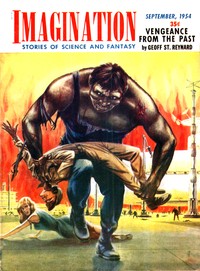
The catalog record for Three Spacemen Left to Die! — Context and Discussion provides practical reading context through 6,668 words, 29 min estimated reading time, and 1 detected text section.
The text analysis averages about 12.9 words per sentence, while the detected sections provide another way to judge how the source is divided.
Project Gutenberg metadata also associates the work with “Science fiction,” connecting these edition facts with the source record’s subject description.
Explore this collection
These alternatives are selected using recorded categories and estimated reading time.
About 29 minutes
Space Future
6,630 recorded words. 0 minutes difference from this book's estimate.
View Gutenberg source #65124About 29 minutes
Space Future
6,562 recorded words. 0 minutes difference from this book's estimate.
View Gutenberg source #65666About 29 minutes
Space Future
6,462 recorded words. 0 minutes difference from this book's estimate.
View Gutenberg source #66144Search stored excerpts and compare books → Choose by your preferences →
Choices use stored catalog measurements. Estimates vary with reading speed. A shared category is a catalog label, not a claim that two books have the same argument or literary quality.
Search reads excerpt text stored with this catalog and links to its associated Gutenberg record. The connection is stored in the site database; this tool does not recheck that every excerpt is word-for-word identical to that external record. Excerpt search does not cover every chapter and does not verify historical publication dates.
Catalog snapshot checked: 2026-09-25. Coverage: 90 public books, 90 available source excerpts.
Calculated from edition completeness, EPUB availability, text structure and catalogue metadata. Not a user rating.
Total of 100 points, scaled to a 2.5-5.0 range. Editions with an empty description or a missing EPUB file are not scored.
Public-domain source text
The source text is kept in the dedicated reader, separate from this catalogue record and its commentary.
The story opens with Commander Al Andrews sealing bulkheads against a "creeping red glow" that has infected one quadrant of the circular, wagon-wheel ship. The disease transforms its victims into living batteries, emitting lethal sparks. Only three men remain: Al, the grizzled veteran; Oakey, the fastidious younger man; and Joe, already in the last stages. The narrative is built around a single, claustrophobic setting—the Control Center—where the men debate whether to fight or surrender to the inevitable.
The story’s structure is remarkably tight. Almost the entire action takes place in the Control Center, a mid-section of a revolving wagon-wheel ship. The energy-proof bulkheads have been locked, creating a sealed arena where the three men confront the disease and each other. The only movement is through dialogue and memory: Al recalls a past encounter on a green planet, and Oakey argues for surrender. The physical confinement mirrors the narrowing of choices. The author uses the ship’s circular design to emphasize that there is no escape—the red glow spreads from one quadrant, and the men are trapped in the center.
The "cherry glow" appears repeatedly, first as a creeping infection on the ship, then emanating from Al’s body as he nears death. The disease is described in terms of energy: "sparks came from Al’s mouth," and his brain becomes "a battery of energy." This image ties the physical decay to the story’s central conflict—whether to destroy the infected or preserve a remnant of humanity. The glow also appears in the final scene, where a meteor trailing red sparks is seen from the green planet, linking the ship’s tragedy to a distant hope.
The narrative moves between Al’s point of view and Oakey’s, but the most striking shift occurs at the end. After Al kills Oakey, the scene cuts to a matron and her son on a green planet, watching a shooting star. The boy says, "Make a wish," and the woman wishes for the return of the boy’s father. This sudden jump from the ship’s claustrophobic interior to an open sky reframes the entire story. Al’s earlier claim that he had a child on that planet—"My kid, Oakey"—is given a poignant payoff, though the reader must infer whether the meteor is Al’s ship or his body.
The story’s tension is driven by the debate between Al and Oakey. Al insists on fighting: "We’re the last earthmen and we’n going down fighting." Oakey counters: "We’re licked, Al. Let’s surrender gracefully." Their arguments hinge on what it means to be human. Oakey sees no future without women or Earth; Al believes in preserving the race, even if only one child survives. The dialogue is blunt and repetitive, reinforcing the characters’ fixed positions. The author uses this verbal sparring to delay the inevitable violence, making the final energy bolt more shocking.
Though the story is set entirely on the ship, the green planet is a constant offstage presence. Al describes a woman he met there—"just like an earth-girl, only prettier"—and claims to have fathered a child. Oakey dismisses this as wishful thinking: "You’re just guessing." The planet remains a hypothetical refuge, never reached. Yet the final scene confirms its reality, showing the woman and boy looking up at the stars. This structural choice—keeping the planet invisible until the last paragraph—creates a sense of longing and uncertainty that colors every decision on the ship.
Readers should pay attention to how the story balances its confined setting with hints of a larger universe. The recurring red glow, the locked bulkheads, and the final shift to the green planet all work together to create a narrative that is both a pressure-cooker drama and a meditation on legacy. The ending leaves key questions open—does the meteor carry Al’s remains, or is it something else?—inviting the reader to decide.
I keep thinking about that quarantined ship—how the red glow meant someone was fading into something else. There’s a similar ache in Madmen of Mars — Text and Context, where isolation twists what a person believes they’re saving. It stayed with me quietly, the way certain lonely images do.
Use these questions to collect your thoughts before moving on.