About 27 minutes
Traitor's Choice — Text and Context
Machines Invention
6,208 recorded words. 0 minutes difference from this book's estimate.
View Gutenberg source #66753
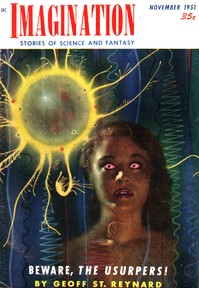
The Gift — Inside the Classic can be approached with a clearer sense of reading commitment from its source measurements: 6,171 words, 27 min estimated reading time, and 1 detected text section.
The text analysis averages about 17.4 words per sentence, while the detected sections provide another way to judge how the source is divided.
Project Gutenberg metadata also associates the work with “Science fiction,” connecting these edition facts with the source record’s subject description.
Explore this collection
These alternatives are selected using recorded categories and estimated reading time.
About 27 minutes
Machines Invention
6,208 recorded words. 0 minutes difference from this book's estimate.
View Gutenberg source #66753About 29 minutes
Machines Invention
6,466 recorded words. 2 minutes difference from this book's estimate.
View Gutenberg source #65980About 29 minutes
Machines Invention
6,503 recorded words. 2 minutes difference from this book's estimate.
View Gutenberg source #68358Search stored excerpts and compare books → Choose by your preferences →
Choices use stored catalog measurements. Estimates vary with reading speed. A shared category is a catalog label, not a claim that two books have the same argument or literary quality.
Search reads excerpt text stored with this catalog and links to its associated Gutenberg record. The connection is stored in the site database; this tool does not recheck that every excerpt is word-for-word identical to that external record. Excerpt search does not cover every chapter and does not verify historical publication dates.
Catalog snapshot checked: 2026-09-25. Coverage: 90 public books, 90 available source excerpts.
Calculated from edition completeness, EPUB availability, text structure and catalogue metadata. Not a user rating.
Total of 100 points, scaled to a 2.5-5.0 range. Editions with an empty description or a missing EPUB file are not scored.
Public-domain source text
The source text is kept in the dedicated reader, separate from this catalogue record and its commentary.
Melvin Sturgis's 1951 short story opens not with the protagonist's miraculous healings but with a courtroom scene thick with tension. The narrative immediately establishes a legal framework: the judge, prosecutor, and public defender debate the relevance of the defendant's childhood. The first witness, Mrs. Ida Mae Holk, offers gossipy testimony about the defendant's large head and brooding eyes, revealing a community's suspicion rather than any supernatural event. The story's structure—a trial interspersed with flashbacks—prioritizes the institutional response to the protagonist's gift over the gift itself.
The story devotes its opening pages to legal procedure. The prosecutor seeks to prove the defendant of unsound mind since birth, calling witnesses to establish a pattern of strangeness. The public defender objects, but the judge overrules. This legal framing suggests that the central conflict is not whether the protagonist can heal, but whether society will label him insane. The courtroom becomes a stage where the community's fear is codified into testimony. Mrs. Holk's rambling answers—she mentions the defendant's father killed in an Oak Ridge explosion, his mother's failure to remarry—paint a picture of small-town judgment. The prosecutor's careful steering of her testimony reveals a deliberate strategy to pathologize the defendant's difference.
When the scene shifts to the Rochelle School for Retarded Children and later to the asylum, the language becomes clinical. The interne describes the operation as a 'wonderful discovery' that will cure insanity by destroying part of the brain. The doctor cheerfully agrees: 'at least he will be sane.' The contrast between the protagonist's internal experience—'a sense of vast loneliness'—and the medical staff's professional satisfaction underscores a chilling disconnect. The straps, plates, and 'sharp pain, blinding and searing' are described with precise, almost detached detail. The story does not romanticize the protagonist's gift; instead, it shows how institutional language redefines healing as a symptom of madness.
The subtitle—'born a thousand years too soon'—appears only in the story's header, not in the narrative itself. The excerpts do not show the protagonist performing any miracle; his healing ability is referenced only in the opening line and through the trial's implication. The story focuses on the aftermath: the trial, the institutionalization, the lobotomy. The wrought iron gates 'clanged shut with a dismal finality.' The protagonist feels no bitterness, only 'vast loneliness' at being unable to fulfill his promise. This suggests a world that punishes what it cannot understand. The catalog subjects list 'Healers -- Fiction' and 'Psychic ability -- Fiction,' but the excerpts emphasize the societal reaction rather than the ability itself.
Readers should note that the story's title, The Gift, is ironic: the protagonist's ability brings him not salvation but a state-sanctioned lobotomy. The narrative withholds any direct depiction of healing, instead forcing the reader to infer the nature of the gift through the testimony of hostile witnesses and the cold efficiency of medical procedure. This structural choice makes the story a critique of how institutions pathologize the extraordinary.
I keep thinking about that trial—how effortlessly a gift gets mistaken for a sickness. Reading about Sloan made me feel the weight of being heard wrong. Later, I found Underground Movement — Reading Notes; it sat with me the same way, quietly reminding me that some stories are less about answers, more about the silence they leave behind.
A brief reflection can help important ideas stay with you longer.