About 126 minutes
Special Delivery — Background and Themes
Other Worlds
28,846 recorded words. 11 minutes difference from this book's estimate.
View Gutenberg source #65886
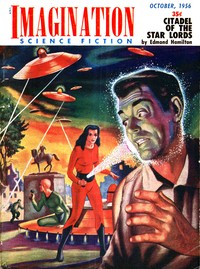
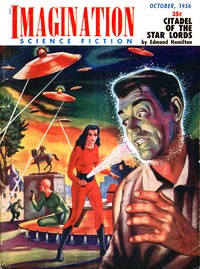
The source record for Citadel of the Star Lords — Context and Discussion measures this digital text at 26,241 words, 1 hr 55 min estimated reading time, and 3 detected text sections.
The text analysis averages about 13.2 words per sentence, while the detected sections provide another way to judge how the source is divided.
Project Gutenberg metadata also associates the work with “Science fiction,” connecting these edition facts with the source record’s subject description.
Explore this collection
These alternatives are selected using recorded categories and estimated reading time.
About 126 minutes
Other Worlds
28,846 recorded words. 11 minutes difference from this book's estimate.
View Gutenberg source #65886About 136 minutes
Other Worlds
31,129 recorded words. 21 minutes difference from this book's estimate.
View Gutenberg source #66005About 94 minutes
Other Worlds
21,604 recorded words. 21 minutes difference from this book's estimate.
View Gutenberg source #66538Search stored excerpts and compare books → Choose by your preferences →
Choices use stored catalog measurements. Estimates vary with reading speed. A shared category is a catalog label, not a claim that two books have the same argument or literary quality.
Search reads excerpt text stored with this catalog and links to its associated Gutenberg record. The connection is stored in the site database; this tool does not recheck that every excerpt is word-for-word identical to that external record. Excerpt search does not cover every chapter and does not verify historical publication dates.
Catalog snapshot checked: 2026-09-25. Coverage: 90 public books, 90 available source excerpts.
Calculated from edition completeness, EPUB availability, text structure and catalogue metadata. Not a user rating.
Total of 100 points, scaled to a 2.5-5.0 range. Editions with an empty description or a missing EPUB file are not scored.
Public-domain source text
The source text is kept in the dedicated reader, separate from this catalogue record and its commentary.
The story begins not with aliens but with a man on the run. Pilot Price, fleeing a cross-border smuggling job, listens to a news broadcast naming him as the pilot who brought revolutionary Arnolfo Ruiz into Mexico. The opening pages are taut with pursuit—dark deserts, a Beechcraft flown without lights, the fear of Border Patrol planes. Hamilton grounds the science fiction in a recognizable 1950s thriller setup, complete with a political exile and an AEC bomb test mentioned on the radio.
Only after this chase does the narrative swerve into the fantastic. Price’s plane is forced down by a strange craft, and he meets Linna, a woman from Vrain Four in the Hercules Cluster. The catalog subjects list time travel, extraterrestrial beings, and apocalyptic fiction, but the excerpts show a more gradual transition: the protagonist’s mundane crime leads him into a world of star lords and a Citadel that “did not fit on Earth at all.”
The excerpts devote considerable space to Price’s escape from human authorities before any extraterrestrial element appears. His internal monologue—“If he was lucky, if he slipped them long enough”—establishes a man accustomed to risk, yet his smuggling of Ruiz is presented as a foolish mistake, not a heroic act. This grounding in ordinary crime makes the later encounter with Linna more jarring. She is described as a “specialist in Earth cultures,” and her questions about his plane’s age and his father’s flying suggest a methodical investigation, not mere curiosity. The dialogue reveals a power imbalance: Price is wary, but Linna controls the information. The catalog subject “human-alien encounters” is thus enacted through interrogation, not combat.
When Price first sees the starship, Hamilton emphasizes its physical impact: “a tower of white metal, enormous, slim, delicate, a thing of slumbering power that caught the throat with awe and wonder.” The description of the Citadel itself is even more striking—a “vast flat-topped tower” surrounded by missile pads and hooded emplacements. The setting, called the Forbidden Belt, is a cleared zone where the earth has been fused to “a substance more durable than iron or concrete.” These details align with the catalog’s “apocalyptic fiction” and “adventure stories” subjects, but the excerpts do not reveal the Citadel’s purpose or the Star Lords’ plans. The structure is menacing and alien, yet the narrative withholds its function, leaving the reader with only Price’s awed perspective.
The catalog includes “time travel” as a subject, but the excerpts offer only oblique hints. Linna mentions that the Ei destroyed the atomic cultures of “your Earth-year 1979,” and Price’s own era is implied to be the 1950s (given the AEC and ICBM references). This suggests a future history or a displaced timeline, but the text does not clarify whether Price has traveled forward or the aliens have arrived in his present. Similarly, Linna’s home planet Vrain Four is described only in brief phrases: “The stars are close and burning, not cold and far-away like yours.” The excerpts do not depict alien society beyond this single character. Readers should note that the story’s scope may be narrower than the catalog subjects imply; the evidence points to a focus on Price’s immediate predicament rather than a full exploration of time travel or alien worlds.
The excerpts end with Price inside the Citadel’s perimeter, having glimpsed its scale but not its rulers. Hamilton’s prose favors concrete imagery—fused earth, a metal mountain, a starship’s “slumbering power”—over exposition. Readers approaching this novella should expect a fast-paced narrative that prioritizes atmosphere and tension over detailed world-building. The catalog’s apocalyptic and adventure tags are borne out by the setting, but the time-travel element remains unconfirmed by the available text. Approach the story as a mid-century pulp thriller that uses alien invasion as a backdrop for a personal flight from justice.
Years pass, but I still recall how Hamilton's pilot carries his past like a hidden weight, its gravity shaping every choice at the Citadel. That same stubborn ache lives in The Thing in the Truck — Inside the Classic, where a quiet load in a cab becomes its own silent passenger. Two strangers, parked in different decades, sharing the same lonely engine.
Your answers remain private and are stored only in this browser.