About 126 minutes
Special Delivery — Background and Themes
Other Worlds
28,846 recorded words. 10 minutes difference from this book's estimate.
View Gutenberg source #65886
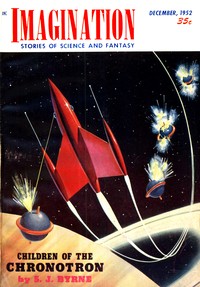
This digital edition of Children of the Chronotron — Themes and Context is described by source-level measurements including 31,129 words, 2 hr 16 min estimated reading time, and 3 detected text sections.
The text analysis averages about 12.6 words per sentence, while the detected sections provide another way to judge how the source is divided.
Project Gutenberg metadata also associates the work with “Science fiction,” connecting these edition facts with the source record’s subject description.
Explore this collection
These alternatives are selected using recorded categories and estimated reading time.
About 126 minutes
Other Worlds
28,846 recorded words. 10 minutes difference from this book's estimate.
View Gutenberg source #65886About 115 minutes
Other Worlds
26,241 recorded words. 21 minutes difference from this book's estimate.
View Gutenberg source #65813About 94 minutes
Other Worlds
21,604 recorded words. 42 minutes difference from this book's estimate.
View Gutenberg source #66538Search stored excerpts and compare books → Choose by your preferences →
Choices use stored catalog measurements. Estimates vary with reading speed. A shared category is a catalog label, not a claim that two books have the same argument or literary quality.
Search reads excerpt text stored with this catalog and links to its associated Gutenberg record. The connection is stored in the site database; this tool does not recheck that every excerpt is word-for-word identical to that external record. Excerpt search does not cover every chapter and does not verify historical publication dates.
Catalog snapshot checked: 2026-09-25. Coverage: 90 public books, 90 available source excerpts.
Calculated from edition completeness, EPUB availability, text structure and catalogue metadata. Not a user rating.
Total of 100 points, scaled to a 2.5-5.0 range. Editions with an empty description or a missing EPUB file are not scored.
Public-domain source text
The source text is kept in the dedicated reader, separate from this catalogue record and its commentary.
The Xlarnans, an ancient race facing extinction from their own artificial sky, built the Chronotron to send themselves back to the beginning of their era—only to repeat the cycle and eventually achieve immortality and sterility. Byrne opens with a compressed history of this alien civilization, detailing their retreat underground, their creation of a radioactive ionosphere, and their eventual loss of control over that life-giving sphere. The prose is brisk and expository, laying out a cosmic problem in a few paragraphs before jumping to Earth in 1952, where a group of airline passengers is abruptly transported to a primitive jungle and confronted by bow-wielding men.
When Henry and Martia experience a sudden shift back to a jungle campsite after a harrowing encounter with a military firing squad, they discover that no one else recalls the city, the warships, or the space ship. The other characters react with blank incomprehension: “The kid's cracking up!” says Weston. Byrne uses this discrepancy to create a quiet tension—Henry and Martia share a private knowledge that isolates them from the group. The ringing in their heads, which they both hear, becomes a subtle marker of their connection to the altered timeline. This pattern of selective memory recurs in the excerpts, suggesting that the Chronotron's effects may be unevenly distributed among those who travel through it.
The Xlarnans' predicament—a protective sphere that becomes a death trap—finds a direct parallel on Earth. Major, the military officer, declares: “Earth is dying! The ionosphere is shifting toward critical mass. Our race… is becoming sterile under the hardening radiations.” The language echoes the Xlarnan description of their own reaction sphere: “the hard radiations increased inexorably.” Byrne draws this parallel explicitly, positioning Earth as a replay of Xlarnan history. The Major's solution—a space ship to Venus—mirrors the Xlarnans' earlier attempt to escape via rockets, which failed due to “collisions with meteors or death due to radiations.” The text thus sets up a recursive pattern: both civilizations face the same threat, and both turn to technological salvation with uncertain outcomes.
Byrne's narrative moves in sudden jumps. The airline passengers are taken from a routine flight to a jungle clearing without explanation; later, they are transported again from a prison yard back to the same campsite “with the abruptness of an explosion.” These transitions are never smoothed over—characters are left disoriented, and the reader shares their confusion. The prose itself mirrors this instability: scenes end mid-sentence or with a line break, and the point of view shifts between Henry's internal sensations (“Something began to happen inside his head”) and external action. This technique reinforces the theme of fractured time, where cause and effect are no longer reliable. The reader must piece together the rules of the Chronotron alongside the characters.
Byrne's novella rewards attention to small details: the ringing in Henry and Martia's heads, the repeated phrase “blank, uncomprehending looks,” and the precise wording of the Xlarnan backstory. The excerpts offer only fragments of the full plot, but they establish a clear pattern of parallel crises and selective memory. Readers may find it useful to track which characters remember what, and to note how the Chronotron's mechanics are hinted at rather than explained outright.
That strange ache of being the only one who remembers—the Chronotron’s lonely witnesses—stays with me. It reminded me of a quiet evening years ago, reading another book about a hunter’s forgotten world, where memory itself felt like a fragile bridge between realities. World of the Hunter — Key Ideas to Explore carried that same weight, a soft sorrow for what vanishes when no one else recalls it.
Use these questions to collect your thoughts before moving on.