C
Callista Fenn
Guest
- Thread Author
- #1
The first real storm of fall moves through, and the afternoon that follows turns warm, clear, and still.
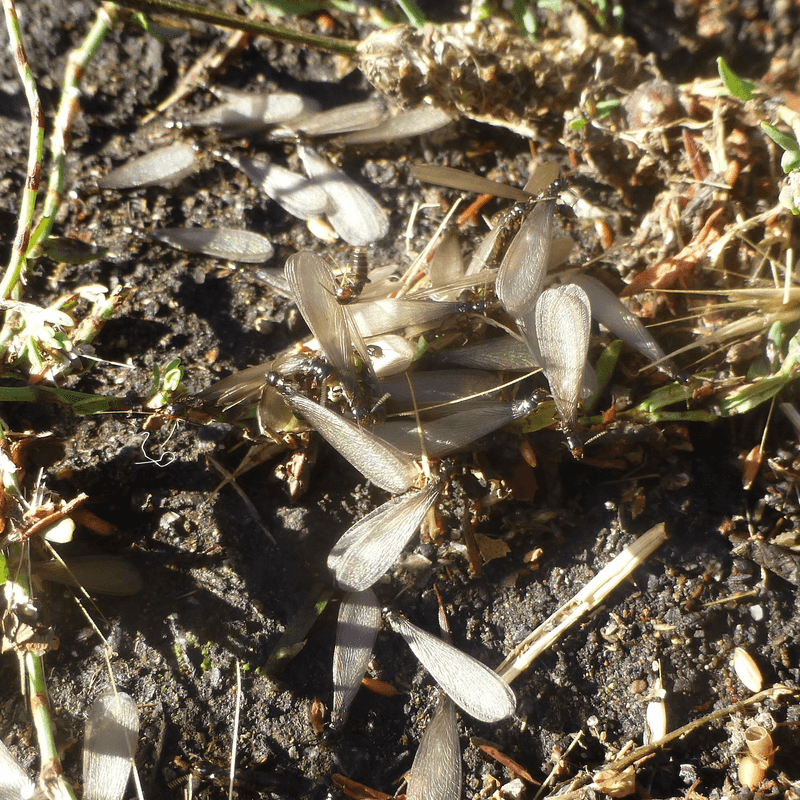
Then something rises from the ground near an old fence post, drifting in a shimmering cloud toward the porch.
Moments like this unsettle many California households, and the reaction often runs ahead of the facts.
The timing carries meaning, and so does the exact spot where the flight began.
Some swarms point to activity tucked away in a back corner of the yard. Others hint at something closer to home.
A few simple clues, a sealed container, and a calm look at the evidence can sort one situation from the other. The answer usually arrives faster than the worry suggests.
© MyWild
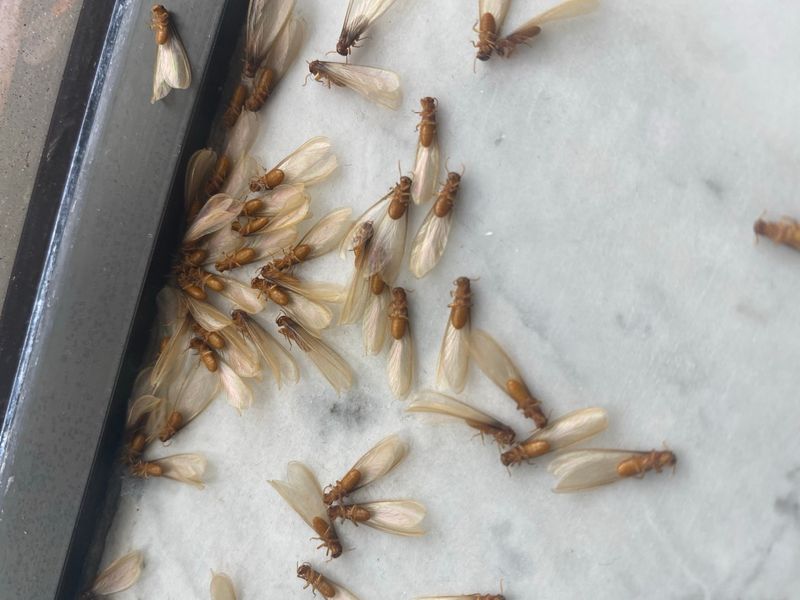
Winged termites appear for a reason. A colony produces swarmers only after it has grown for several years into a large, stable group.
Their arrival signals an established colony living somewhere nearby, often underground or inside wood.
Swarmers are the colony’s reproductives. They leave home, fly briefly, land, shed their wings, and pair up, with each new king and queen seeking a moist, protected spot.
Most swarmers rarely succeed. Birds, lizards, spiders, and dry ground stop the majority before they settle, so one swarm seldom means dozens of new colonies next week.
The real news concerns the parent colony they came from.
Location matters. A cloud rising from a stump, a fence post, or bare soil in a back corner may point to a colony in the yard.
Swarmers pouring from a wall, window frame, or crack in a slab tell a more serious story about the house itself.
Noting the exact spot and time of day helps, along with a few photos.
A handful of insects in a sealed jar or zip bag gives an inspector solid clues later.
Swarmers that have shed their wings still make useful samples, and loose wings can be collected as well.
A swarm works as a message from below rather than a reason to panic.
Colonies grow slowly, so careful observation over a few days rarely costs anything.
© Reddit
The morning after a drenching storm often clears by afternoon, with warm air and settled wind. For western subterranean termites, that combination signals takeoff.
According to UC IPM, these native termites swarm on clear, warm days following rain, usually in fall, though spring flights also occur.
Many Californians notice them right after the first real rain of the season, sometimes within a day or two.
Rain matters because moist soil helps new kings and queens dig in quickly once they land. Dry, crusty ground makes starting a colony far harder.
Warm air and calm skies help the weak fliers travel and find each other.
Neighbors often notice swarms on the same day, since nearby colonies respond to the same weather. An entire block can fill with fliers at once.
A single flight may last only a short time, and the yard can fall quiet again by evening.
Watching after each big storm this fall and spring pays off. A quick note of the date and weather during each flight builds a useful record.
Swarms rising from the same spot year after year strongly suggest a colony settled there for the long haul.
Rainy days themselves tend to stay calm, with activity starting once the sun returns.
Late October and November storms often bring the season’s biggest flights, especially in inland valleys where warm afternoons follow cool, wet mornings.
© Parade
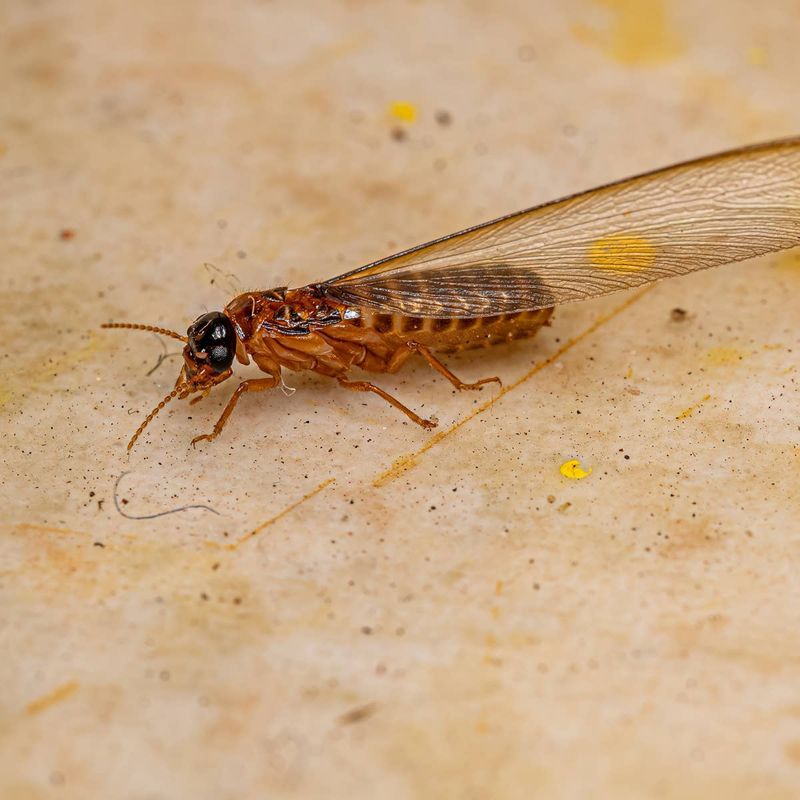
A magnifying glass and a white index card reveal plenty. Set on the card, a captured flier shows three features that identify a termite swarmer.
The antennae come first. Termite antennae are straight and resemble a short string of tiny beads, without a bend in the middle.
The body offers the second clue. A termite has a broad waist, so the body looks thick and even from front to back, with no pinched section.
The wings complete the picture. Termites have four wings of about equal length and shape, often longer than the body and milky or smoky in color.
Western subterranean swarmers look dark, nearly black, while drywood swarmers tend to have reddish brown heads and bodies.
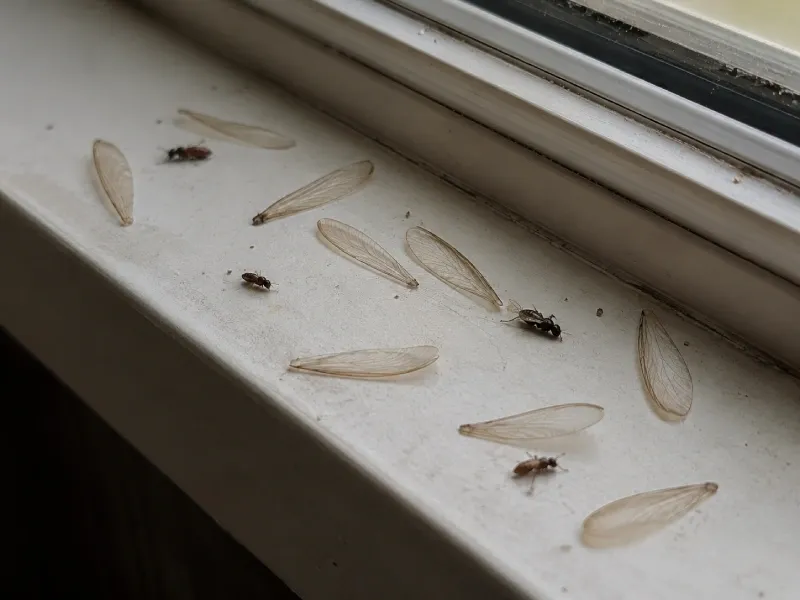
Wings detach easily, so piles of loose wings near windows or doors are common. Wings alone rarely settle the question, since flying ants shed theirs too.
Antennae and waist shape deserve a check whenever possible.
Termites are not close relatives of ants at all. Scientists now group them with cockroaches, which explains why their bodies look so different from ants.
A few specimens kept in a sealed jar or zip bag make identification fast and certain.
Clear photos taken under good light, ideally with a ruler or coin for scale, help an inspector compare size and color.
Several samples work better than one, since a single damaged insect can mislead.
© Reddit
Plenty of worried homeowners have called about termites, only to learn they were watching ants. The mix-up comes easily, since both insects swarm in warm weather and large numbers.
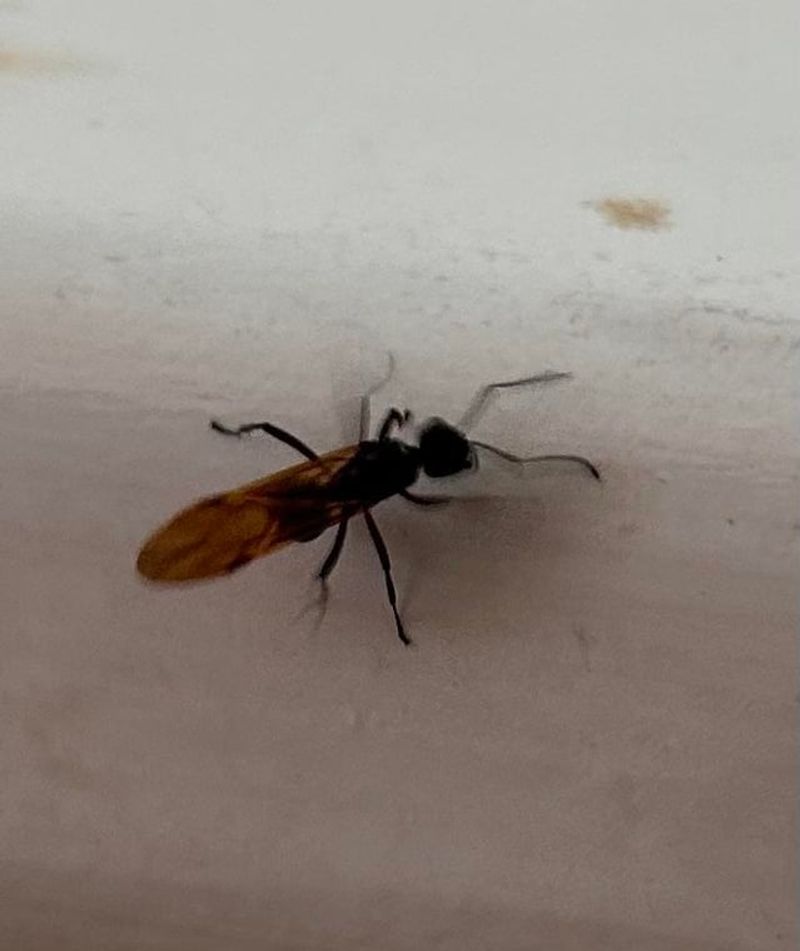
Antennae offer the fastest clue. An ant’s antennae bend sharply, like an elbow, while termite antennae stay straight, a difference that stands out clearly under a magnifier.
The waist helps next. Flying ants have a pinched, narrow waist, almost like an hourglass, with the body clearly split into sections.
A termite, by comparison, looks thick and straight through the middle.
Wings tell part of the story too. On a flying ant, the front wings are longer than the back wings, while termite wings all match in size.
Both insects drop their wings, though, so a loose wing on the windowsill proves little by itself.
The difference matters. Most flying ants are a nuisance rather than a threat to framing, and correct identification shapes the next step and can save money.
Carpenter ants can tunnel into damp wood, yet they excavate it rather than eat it the way termites do.
Their presence still points to a moisture problem worth fixing.
Uncertain cases benefit from a saved sample. UC IPM’s online termite and ant identification pages, a county Agricultural Commissioner’s office, or a licensed inspector can help sort one from the other.
A quick confirmation removes guesswork and keeps unnecessary treatments off the table.
© Clark Pest Control
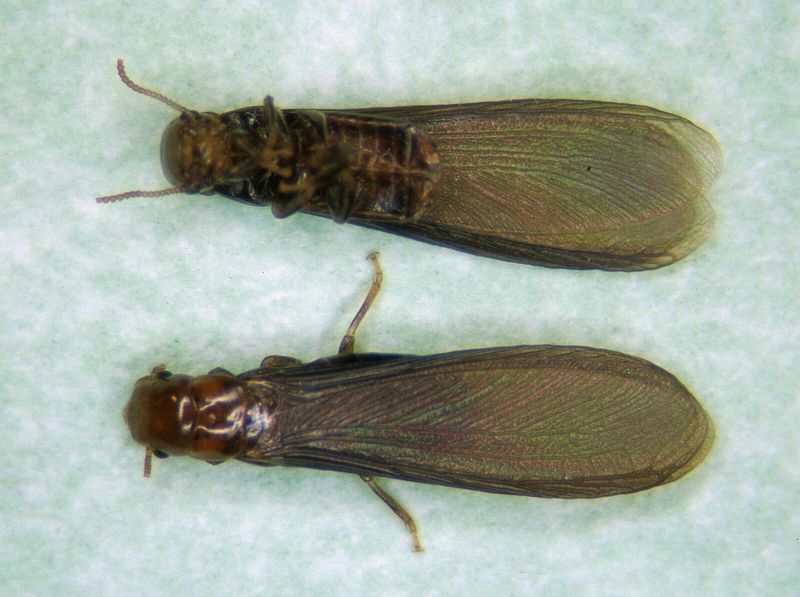
Not every swarm waits for rain. On a hot, sunny September day, reddish brown fliers may drift out of an attic vent or window frame.
Those are likely western drywood termites, which keep a different schedule.
UC IPM notes that drywood swarmers fly during the daytime in summer and fall. They run larger than subterranean swarmers, with reddish brown bodies and smoky wings.
They often appear on sunny days and gather near lights or windows, sometimes collecting on sills by the dozen.
The biggest difference involves where they live. Drywood termites need no contact with soil, since the entire colony lives inside dry wood.
Rafters, eaves, trim, door frames, and furniture all qualify. They’re common in Southern California, along the coast, and in parts of the Central Valley and desert.
These termites push tiny, hard pellets out of small holes. The pellets have six ridged sides and pile up like coarse sand below infested wood.
UC IPM points out that pellets alone can’t confirm an active colony, since old piles may sit for years.
A summer swarm from a wall or attic points to drywood termites in the structure itself rather than the yard.
Sweeping up existing pellets, then watching for fresh ones, helps show current activity. Swarm locations deserve noting for an inspector.
Drywood colonies grow slowly, so there’s time to choose a plan carefully rather than rush into treatment.
© No More Termitex
Outdoor swarms can come from a stump or buried board. Indoor swarms in a living room, garage, or bathroom are a different matter and deserve a professional inspection.
Swarmers inside usually mean the colony has a way into the structure.
Subterranean termites may enter through slab cracks, around plumbing, or via wood touching soil. Drywood swarmers may be leaving a colony tucked inside walls, trim, or attic framing.
Gathering spots offer clues. Windowsills, light fixtures, and sliding doors draw swarmers toward light, and piles of shed wings in one corner can hint at a nearby exit point.
Mud tubes on foundation walls are another strong sign of subterranean termites.
An indoor swarm rarely calls for action that night. Termites work slowly, and a house won’t collapse this week, though waiting months is unwise as damage builds quietly.
Vacuuming up swarmers works well after a few are saved in a sealed jar. Subterranean swarmers can’t start a colony indoors without soil and moisture.
Drywood swarmers occasionally settle into exposed wood, another reason not to delay.
Scheduling an inspection with a licensed structural pest control company comes next, ideally within a few weeks.
Store-bought bug spray in walls is best avoided. It can mask clues and push termites elsewhere, so leaving evidence as found helps the inspector.
Photos of the swarm, taken before cleanup, preserve details that vacuuming erases.
© Reddit
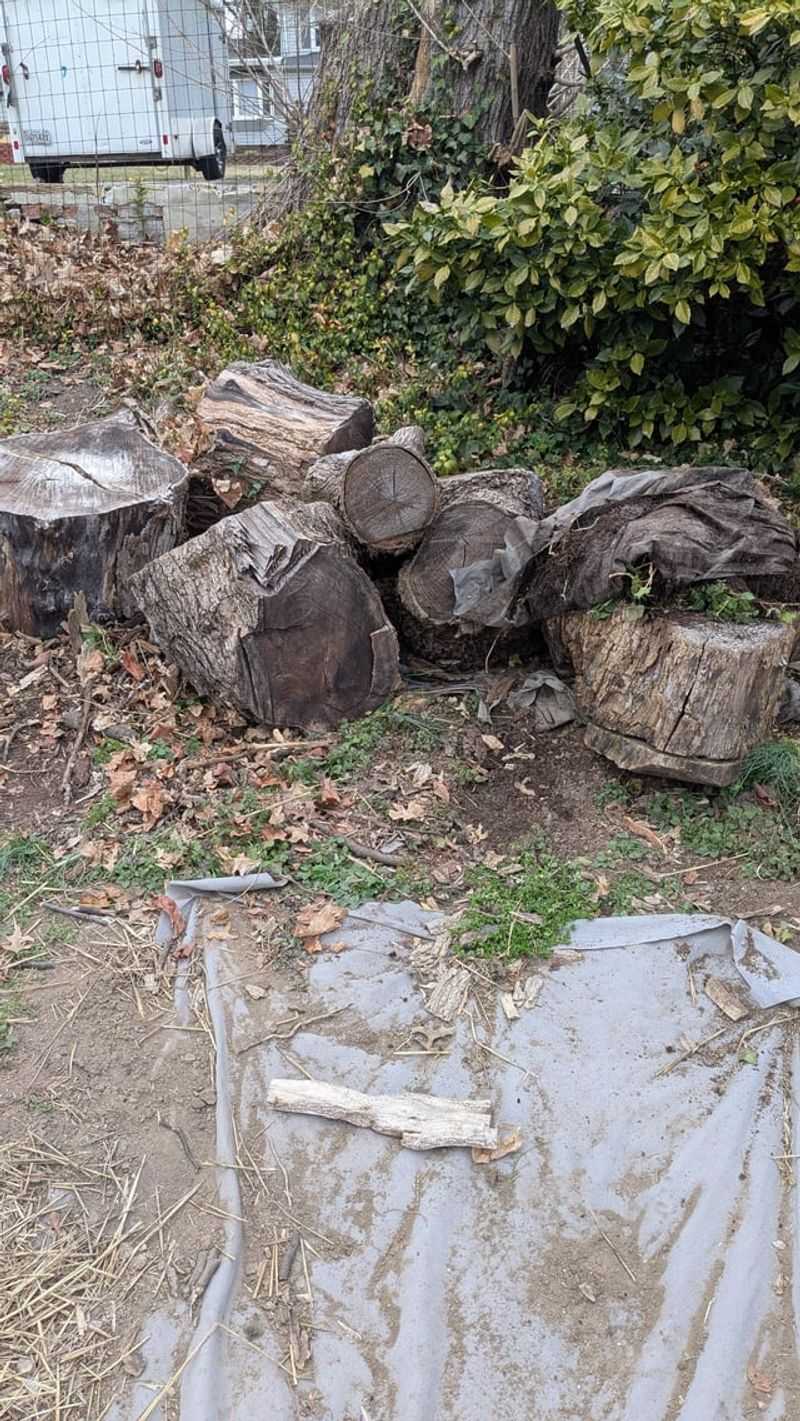
A walk around the yard after a swarm often reveals the problem. Soggy soil, firewood stacked against a wall, and fence posts in bare dirt welcome subterranean termites.
These termites live in the soil and need steady moisture.
Western subterranean termites travel from soil to wood through underground tunnels and mud tubes. Wood touching soil gives them a direct bridge to a meal.
UC IPM lists wood-to-soil contact as a major risk around homes.
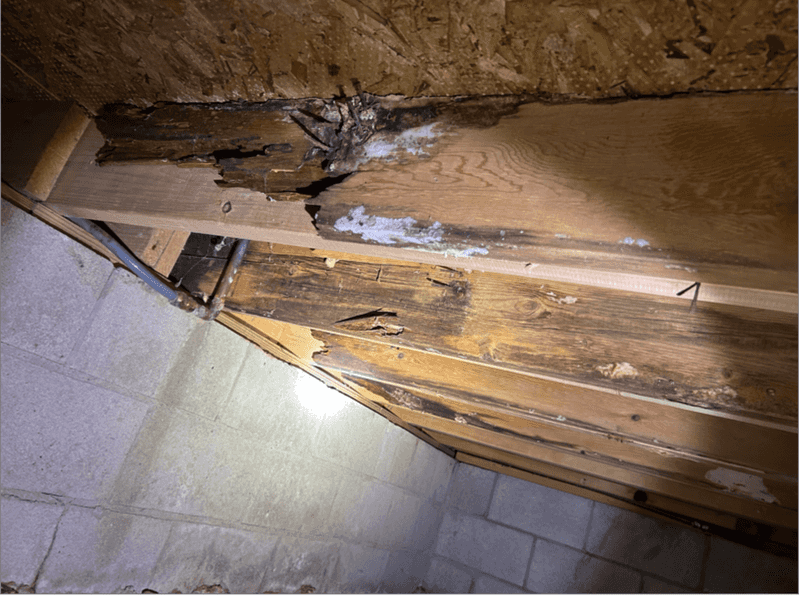
Moisture makes it worse. Leaky faucets, broken sprinklers, clogged gutters, and poor drainage keep soil damp near the foundation, and damp wood is easier for termites to eat.
Small fixes help considerably. Firewood and lumber belong off the ground and at least 30 feet from the house, matching CAL FIRE guidance.
Pulling mulch and soil back so siding and trim sit several inches above the dirt helps too.
Within five feet of the home, Zone 0 rules in designated fire areas exclude bark mulch as well.
Repairing leaks and pointing downspouts away from the foundation cuts moisture.
Removing old stumps, scrap boards, and buried construction debris helps. Clear crawl space vents let air dry the area, and trimmed plants hold less moisture against walls.
These steps won’t remove a colony that’s already settled. They do make a home a less tempting target and help any treatment work better.
Fall, before winter rains set in, makes an ideal time for this cleanup.
© Reddit
A jar of fliers, a few photos, and notes on timing and location make a strong case file. The next step hands it to a professional.
A licensed structural pest control operator can confirm the insect and locate the colony.
In California, the Structural Pest Control Board licenses these companies, and any license can be checked online before hiring.
A thorough inspector examines the foundation, crawl space, attic, eaves, and wood near soil.
Samples and notes speed the visit and help the inspector decide between subterranean and drywood termites, since each type calls for a different plan.
Do-it-yourself treatments for the house are best avoided. Soil treatments, fumigation, and wood injections require specialized training, equipment, and licensing.
Home products often miss the colony and can make it harder to find later.
A written report deserves requesting, and suggested treatment justifies more than one bid. Questions about what was found, where, and why each method fits all make sense.
A careful company explains options calmly rather than pushing urgency.
For additional identification help, UC IPM’s Pest Notes on termites offer clear photos and guidance, and a county Agricultural Commissioner’s office can often examine samples.
Localized treatments for drywood termites can sometimes replace whole-structure fumigation, so asking about options for the specific situation can save money and disruption.
Many companies also offer free or low-cost initial inspections.
The post What It Means When Termites Swarm Your California Yard After Rain appeared first on Positivebloom.
Then something rises from the ground near an old fence post, drifting in a shimmering cloud toward the porch.
Moments like this unsettle many California households, and the reaction often runs ahead of the facts.
The timing carries meaning, and so does the exact spot where the flight began.
Some swarms point to activity tucked away in a back corner of the yard. Others hint at something closer to home.
A few simple clues, a sealed container, and a calm look at the evidence can sort one situation from the other. The answer usually arrives faster than the worry suggests.
A Swarm Means A Mature Colony Is Nearby
© MyWild
Winged termites appear for a reason. A colony produces swarmers only after it has grown for several years into a large, stable group.
Their arrival signals an established colony living somewhere nearby, often underground or inside wood.
Swarmers are the colony’s reproductives. They leave home, fly briefly, land, shed their wings, and pair up, with each new king and queen seeking a moist, protected spot.
Most swarmers rarely succeed. Birds, lizards, spiders, and dry ground stop the majority before they settle, so one swarm seldom means dozens of new colonies next week.
The real news concerns the parent colony they came from.
Location matters. A cloud rising from a stump, a fence post, or bare soil in a back corner may point to a colony in the yard.
Swarmers pouring from a wall, window frame, or crack in a slab tell a more serious story about the house itself.
Noting the exact spot and time of day helps, along with a few photos.
A handful of insects in a sealed jar or zip bag gives an inspector solid clues later.
Swarmers that have shed their wings still make useful samples, and loose wings can be collected as well.
A swarm works as a message from below rather than a reason to panic.
Colonies grow slowly, so careful observation over a few days rarely costs anything.
Soaking Rain And Clear Days Trigger Fall Flights
The morning after a drenching storm often clears by afternoon, with warm air and settled wind. For western subterranean termites, that combination signals takeoff.
According to UC IPM, these native termites swarm on clear, warm days following rain, usually in fall, though spring flights also occur.
Many Californians notice them right after the first real rain of the season, sometimes within a day or two.
Rain matters because moist soil helps new kings and queens dig in quickly once they land. Dry, crusty ground makes starting a colony far harder.
Warm air and calm skies help the weak fliers travel and find each other.
Neighbors often notice swarms on the same day, since nearby colonies respond to the same weather. An entire block can fill with fliers at once.
A single flight may last only a short time, and the yard can fall quiet again by evening.
Watching after each big storm this fall and spring pays off. A quick note of the date and weather during each flight builds a useful record.
Swarms rising from the same spot year after year strongly suggest a colony settled there for the long haul.
Rainy days themselves tend to stay calm, with activity starting once the sun returns.
Late October and November storms often bring the season’s biggest flights, especially in inland valleys where warm afternoons follow cool, wet mornings.
Termites Have Straight Antennae And Equal Wings
© Parade
A magnifying glass and a white index card reveal plenty. Set on the card, a captured flier shows three features that identify a termite swarmer.
The antennae come first. Termite antennae are straight and resemble a short string of tiny beads, without a bend in the middle.
The body offers the second clue. A termite has a broad waist, so the body looks thick and even from front to back, with no pinched section.
The wings complete the picture. Termites have four wings of about equal length and shape, often longer than the body and milky or smoky in color.
Western subterranean swarmers look dark, nearly black, while drywood swarmers tend to have reddish brown heads and bodies.
Wings detach easily, so piles of loose wings near windows or doors are common. Wings alone rarely settle the question, since flying ants shed theirs too.
Antennae and waist shape deserve a check whenever possible.
Termites are not close relatives of ants at all. Scientists now group them with cockroaches, which explains why their bodies look so different from ants.
A few specimens kept in a sealed jar or zip bag make identification fast and certain.
Clear photos taken under good light, ideally with a ruler or coin for scale, help an inspector compare size and color.
Several samples work better than one, since a single damaged insect can mislead.
Flying Ants Have Elbowed Antennae
Plenty of worried homeowners have called about termites, only to learn they were watching ants. The mix-up comes easily, since both insects swarm in warm weather and large numbers.
Antennae offer the fastest clue. An ant’s antennae bend sharply, like an elbow, while termite antennae stay straight, a difference that stands out clearly under a magnifier.
The waist helps next. Flying ants have a pinched, narrow waist, almost like an hourglass, with the body clearly split into sections.
A termite, by comparison, looks thick and straight through the middle.
Wings tell part of the story too. On a flying ant, the front wings are longer than the back wings, while termite wings all match in size.
Both insects drop their wings, though, so a loose wing on the windowsill proves little by itself.
The difference matters. Most flying ants are a nuisance rather than a threat to framing, and correct identification shapes the next step and can save money.
Carpenter ants can tunnel into damp wood, yet they excavate it rather than eat it the way termites do.
Their presence still points to a moisture problem worth fixing.
Uncertain cases benefit from a saved sample. UC IPM’s online termite and ant identification pages, a county Agricultural Commissioner’s office, or a licensed inspector can help sort one from the other.
A quick confirmation removes guesswork and keeps unnecessary treatments off the table.
Drywood Swarmers Fly In Late Summer And Fall
© Clark Pest Control
Not every swarm waits for rain. On a hot, sunny September day, reddish brown fliers may drift out of an attic vent or window frame.
Those are likely western drywood termites, which keep a different schedule.
UC IPM notes that drywood swarmers fly during the daytime in summer and fall. They run larger than subterranean swarmers, with reddish brown bodies and smoky wings.
They often appear on sunny days and gather near lights or windows, sometimes collecting on sills by the dozen.
The biggest difference involves where they live. Drywood termites need no contact with soil, since the entire colony lives inside dry wood.
Rafters, eaves, trim, door frames, and furniture all qualify. They’re common in Southern California, along the coast, and in parts of the Central Valley and desert.
These termites push tiny, hard pellets out of small holes. The pellets have six ridged sides and pile up like coarse sand below infested wood.
UC IPM points out that pellets alone can’t confirm an active colony, since old piles may sit for years.
A summer swarm from a wall or attic points to drywood termites in the structure itself rather than the yard.
Sweeping up existing pellets, then watching for fresh ones, helps show current activity. Swarm locations deserve noting for an inspector.
Drywood colonies grow slowly, so there’s time to choose a plan carefully rather than rush into treatment.
Swarmers Indoors Call For An Inspection
© No More Termitex
Outdoor swarms can come from a stump or buried board. Indoor swarms in a living room, garage, or bathroom are a different matter and deserve a professional inspection.
Swarmers inside usually mean the colony has a way into the structure.
Subterranean termites may enter through slab cracks, around plumbing, or via wood touching soil. Drywood swarmers may be leaving a colony tucked inside walls, trim, or attic framing.
Gathering spots offer clues. Windowsills, light fixtures, and sliding doors draw swarmers toward light, and piles of shed wings in one corner can hint at a nearby exit point.
Mud tubes on foundation walls are another strong sign of subterranean termites.
An indoor swarm rarely calls for action that night. Termites work slowly, and a house won’t collapse this week, though waiting months is unwise as damage builds quietly.
Vacuuming up swarmers works well after a few are saved in a sealed jar. Subterranean swarmers can’t start a colony indoors without soil and moisture.
Drywood swarmers occasionally settle into exposed wood, another reason not to delay.
Scheduling an inspection with a licensed structural pest control company comes next, ideally within a few weeks.
Store-bought bug spray in walls is best avoided. It can mask clues and push termites elsewhere, so leaving evidence as found helps the inspector.
Photos of the swarm, taken before cleanup, preserve details that vacuuming erases.
Wet Soil And Woodpiles Feed Colonies
A walk around the yard after a swarm often reveals the problem. Soggy soil, firewood stacked against a wall, and fence posts in bare dirt welcome subterranean termites.
These termites live in the soil and need steady moisture.
Western subterranean termites travel from soil to wood through underground tunnels and mud tubes. Wood touching soil gives them a direct bridge to a meal.
UC IPM lists wood-to-soil contact as a major risk around homes.
Moisture makes it worse. Leaky faucets, broken sprinklers, clogged gutters, and poor drainage keep soil damp near the foundation, and damp wood is easier for termites to eat.
Small fixes help considerably. Firewood and lumber belong off the ground and at least 30 feet from the house, matching CAL FIRE guidance.
Pulling mulch and soil back so siding and trim sit several inches above the dirt helps too.
Within five feet of the home, Zone 0 rules in designated fire areas exclude bark mulch as well.
Repairing leaks and pointing downspouts away from the foundation cuts moisture.
Removing old stumps, scrap boards, and buried construction debris helps. Clear crawl space vents let air dry the area, and trimmed plants hold less moisture against walls.
These steps won’t remove a colony that’s already settled. They do make a home a less tempting target and help any treatment work better.
Fall, before winter rains set in, makes an ideal time for this cleanup.
Call A Licensed Inspector To Confirm
A jar of fliers, a few photos, and notes on timing and location make a strong case file. The next step hands it to a professional.
A licensed structural pest control operator can confirm the insect and locate the colony.
In California, the Structural Pest Control Board licenses these companies, and any license can be checked online before hiring.
A thorough inspector examines the foundation, crawl space, attic, eaves, and wood near soil.
Samples and notes speed the visit and help the inspector decide between subterranean and drywood termites, since each type calls for a different plan.
Do-it-yourself treatments for the house are best avoided. Soil treatments, fumigation, and wood injections require specialized training, equipment, and licensing.
Home products often miss the colony and can make it harder to find later.
A written report deserves requesting, and suggested treatment justifies more than one bid. Questions about what was found, where, and why each method fits all make sense.
A careful company explains options calmly rather than pushing urgency.
For additional identification help, UC IPM’s Pest Notes on termites offer clear photos and guidance, and a county Agricultural Commissioner’s office can often examine samples.
Localized treatments for drywood termites can sometimes replace whole-structure fumigation, so asking about options for the specific situation can save money and disruption.
Many companies also offer free or low-cost initial inspections.
The post What It Means When Termites Swarm Your California Yard After Rain appeared first on Positivebloom.