About 46 minutes
The Toy — A Closer Reading
Other Worlds
10,376 recorded words. 12 minutes difference from this book's estimate.
View Gutenberg source #65945
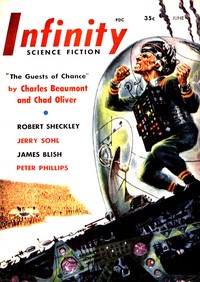
For Under the Skin — Text and Context, the stored edition analysis reports 13,249 words, 58 min estimated reading time, and 2 detected text sections.
The text analysis averages about 12.6 words per sentence, while the detected sections provide another way to judge how the source is divided.
Project Gutenberg metadata also associates the work with “Science fiction,” connecting these edition facts with the source record’s subject description.
Explore this collection
These alternatives are selected using recorded categories and estimated reading time.
About 46 minutes
Other Worlds
10,376 recorded words. 12 minutes difference from this book's estimate.
View Gutenberg source #65945About 43 minutes
Other Worlds
9,776 recorded words. 15 minutes difference from this book's estimate.
View Gutenberg source #64820About 38 minutes
Other Worlds
8,615 recorded words. 20 minutes difference from this book's estimate.
View Gutenberg source #66613Search stored excerpts and compare books → Choose by your preferences →
Choices use stored catalog measurements. Estimates vary with reading speed. A shared category is a catalog label, not a claim that two books have the same argument or literary quality.
Search reads excerpt text stored with this catalog and links to its associated Gutenberg record. The connection is stored in the site database; this tool does not recheck that every excerpt is word-for-word identical to that external record. Excerpt search does not cover every chapter and does not verify historical publication dates.
Catalog snapshot checked: 2026-09-25. Coverage: 90 public books, 90 available source excerpts.
Calculated from edition completeness, EPUB availability, text structure and catalogue metadata. Not a user rating.
Total of 100 points, scaled to a 2.5-5.0 range. Editions with an empty description or a missing EPUB file are not scored.
Public-domain source text
The source text is kept in the dedicated reader, separate from this catalogue record and its commentary.
The narrator, a journalist for Universal News, opens by reflecting on a photograph of a Martian diplomat's wife that looks indistinguishable from any human woman. This observation triggers a flashback to his early days on Mars with his colleague Deborah, covering a disaster in the Ul Mountains—a diranium mining colony threatened by power failure and extreme cold. The story he never wrote, he hints, illustrates a point he tries to make when he can.
The excerpts reveal a first-person voice that is wry and self-aware, punctuated by banter with his friend Charley. The setting is a spacecraft en route to Ul, where the narrator grows suspicious of the pilot Vechi and the locked control room. The narrative tension builds through dialogue and small details, such as Charley's hidden gun and a game of stud king used to discuss their predicament.
The narrator’s voice is distinctive: cynical, reflective, and occasionally self-deprecating. He describes the Martians as “friendly and grateful but aloof and paternally amused by our energies,” a phrasing that captures both human presumption and Martian inscrutability. The story is framed as a confession—a story he never wrote but is now ready to break. This frame gives the narrative a retrospective urgency, as if the events have been waiting for the right moment to be told.
The excerpts show a preference for indirect revelation. The narrator does not state outright that something is wrong; instead, he lets details accumulate: the locked control room, the absence of pilots, Charley’s unease. The dialogue between the narrator and Charley is laced with sarcasm (“Master Brain,” “No man of action, I!”) that masks their growing anxiety. This technique keeps the reader alert to subtext.
The catalog subjects list “Martians” and “Human-alien encounters,” but the excerpts offer a more nuanced picture. The Martians are not exotic monsters; they are described as polite, secretive, and inscrutable. The narrator notes that “no ancient system of purdah was ever stricter” regarding Martian women and children, whom humans have never seen. This secrecy is a source of frustration and fascination.
The disaster at Ul is a mining crisis, but the Martians control the diranium ore and its uses, keeping humans in the dark. The narrator admits, “We didn’t know anything about diranium then and the Martians kept it that way.” This dynamic—human eagerness to help versus Martian reserve—creates a tension that is more cultural than confrontational. The story’s conflict may hinge on what the Martians are hiding, not what humans are doing.
The journey to Ul occupies much of the excerpted text, and it is here that the story’s suspense is built. The narrator, Charley, and Deborah are passengers on the Starfish, a spacecraft piloted by the enigmatic Vechi and his crew. The locked control room, the absence of pilots, and Charley’s discovery of a hidden gun all point to a possible hijacking or conspiracy.
The narrator’s internal monologue reveals his doubts: “I had the uneasy feeling that something would prevent it.” The game of stud king becomes a cover for planning, with coded phrases like “Heads” and “Son of a space cook” signaling their need to communicate secretly. The excerpts end before the resolution, leaving the reader uncertain whether the threat is real or imagined. This ambiguity is a deliberate narrative choice, forcing the reader to share the narrator’s uncertainty.
The excerpts from Under the Skin offer a tightly focused narrative that blends journalism, alien contact, and suspense. Readers should pay attention to the narrator’s framing—he is telling a story he never wrote, which suggests that the events may have consequences he is only now ready to reveal. The cultural barriers between humans and Martians are as central as the plot’s immediate dangers. The story rewards close reading of dialogue and small details, as the narrator often communicates more through implication than direct statement.
There’s a particular hush in both—the way an unspoken secret can shape a whole world. That reporter’s unfinished tale, with its uneasy silences aboard the ship, reminds me of the quiet gap between words in The Toy — A Closer Reading. It asks what we notice, and what we choose to leave unsaid.
A brief reflection can help important ideas stay with you longer.