
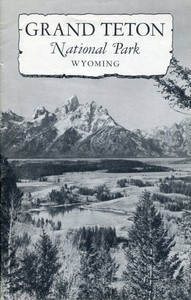
Grand Teton National Park, Wyoming (1952) by United States. National Park Service
Let's be clear from the start: this isn't a novel. Published by the National Park Service in 1952, this book is an official guide to Grand Teton National Park. But calling it just a guide feels like selling it short. It's a deliberate portrait of a place, painted with words, maps, and black-and-white photographs.
The Story
There's no traditional plot. Instead, the 'story' is the park itself. The book methodically walks you through the Tetons. It starts with the geology—how these jagged peaks, some of the youngest mountains in North America, shot up while the valley floor sank. It introduces you to the ecosystems, from the alpine zones down to the sagebrush flats. It details the trails you can hike, the lakes you can boat on, and the wildlife you might spot (with hopeful advice about seeing a moose). Woven throughout is the human history, from Native American presence to the early ranchers and climbers. It presents the park as a complete, living entity to be respected and explored.
Why You Should Read It
I love this for its voice. It's written with a calm, authoritative kindness, like a ranger who's seen it all but still gets excited about a perfect sunrise over the peaks. There's a wonderful, mid-century optimism to it—a belief that if people just understand how special a place is, they'll naturally want to protect it. Reading it today is fascinating. You see what they chose to highlight (solitude, challenge) versus what modern guides might. The photography alone is worth it; these aren't glossy glamour shots, but sincere, dramatic compositions that make you want to lace up your boots.
Final Verdict
This is perfect for park nerds, history lovers, and anyone who treasures the Tetons. It's for the person who visits a park and then wants to know the 'why' behind the 'wow.' It's also a great, compact read before a trip to Jackson Hole, offering context you won't get from a flashy modern website. Think of it as the quiet, knowledgeable companion to the loud, beautiful reality of the mountains themselves. You'll finish it feeling like you've had a conversation with the past, and you'll look at the park with just a little more depth.
This text is dedicated to the public domain. You are welcome to share this with anyone.
Mark Brown
7 months agoI started reading out of curiosity and the storytelling feels authentic and emotionally grounded. One of the best books I've read this year.
Elizabeth Taylor
2 months agoThis is one of those stories where the arguments are well-supported by credible references. A valuable addition to my collection.
Daniel Lopez
7 months agoThe formatting on this digital edition is flawless.
Deborah Miller
4 months agoBeautifully written.




Lucas Davis
11 months agoI didn't expect much, but it provides a comprehensive overview perfect for everyone. Don't hesitate to start reading.