
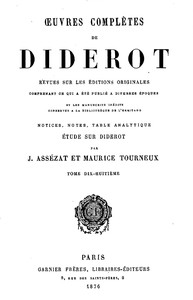
Lettres à Mademoiselle de Volland by Denis Diderot
This book isn't a novel with a plot in the traditional sense. It's a one-sided conversation captured on paper, spanning more than two decades. Denis Diderot, the driving force behind the revolutionary Encyclopédie, wrote these letters to Sophie Volland, an educated, intellectually independent woman he met in 1755. Their relationship, though he was married, became the emotional center of his life.
The Story
The 'story' is the unfolding of a life and a mind. Through these letters, we follow Diderot's struggles. We see him battling government censors, managing the endless drama of contributors to his Encyclopédie, and worrying about money. But we also get the good stuff: his immediate, excited reviews of art salons and new plays, his funny stories about awkward dinner parties, and his profound musings on science, morality, and what it means to be human. All of this is filtered through his desire to connect with Sophie, to make her laugh, to make her think, and to assure her of his constant affection. It's a lifetime of thoughts sent to his favorite person.
Why You Should Read It
You should read this to meet the man, not just the philosopher. History books give us Diderot the intellectual rebel. These letters show us Diderot the friend, the lover, the frustrated artist, and the gossip. His voice is incredibly modern—direct, emotional, and sometimes brilliantly messy. He doesn't separate his big ideas from his daily life. A thought about the nature of genius might be followed by a complaint about a headache. This blend makes his towering intellect feel accessible and deeply human. It’s a masterclass in how to observe the world with curiosity and report back with passion.
Final Verdict
This collection is perfect for anyone who loves peeking behind the curtain of history. If you enjoy biographies, personal diaries, or the feeling of discovering a real person in the past, you'll adore this. It's also a great, non-intimidating way to engage with Enlightenment ideas—you get them served with personality and context. Fair warning: it's not a page-turning thriller. It's a book to savor in pieces, like enjoying a long, meandering conversation with a fascinating friend over many years. Pick it up when you want something thoughtful, intimate, and genuinely surprising.
This historical work is free of copyright protections. Feel free to use it for personal or commercial purposes.
Kenneth Miller
6 months agoWow.


Matthew Lee
2 months agoI wanted to compare this perspective with traditional views, the logic behind each conclusion is easy to follow and verify. If you want to master this topic, start right here.