
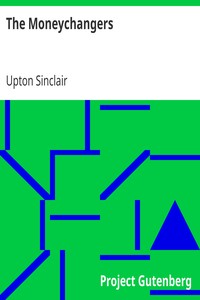
The Moneychangers by Upton Sinclair
Upton Sinclair is best known for 'The Jungle' and its shocking look at the meatpacking industry. But in 'The Moneychangers,' he turns his fierce gaze on an even bigger beast: the American financial system. He wrote this in the wake of the 1907 Bankers' Panic, and you can feel the steam coming off the pages.
The Story
The plot centers on Allan Montague, a lawyer who moves from Mississippi to New York City. Through his friend and love interest, Lucy Dupree, he gets pulled into the orbit of her powerful and corrupt brother-in-law, Dan Waterman. Waterman is a titan of finance, a man who builds and breaks fortunes with a phone call. Montague becomes a reluctant witness as Waterman and his rivals engineer a stock market crash for their own gain. We see the panic from the top—the secret meetings, the lies to the press, the cold calculations—and from the bottom, as ordinary people lose their life savings. It's a story of greed, betrayal, and the immense human cost of high finance.
Why You Should Read It
What makes this book stick with you is Sinclair's anger. He's not just telling a story; he's putting the whole system on trial. The characters aren't just greedy—they're morally bankrupt, seeing people as numbers on a ledger. Yet, it's not a hopeless read. In Montague, we get a protagonist who is horrified by what he sees and struggles to find a way to live with integrity in a corrupt world. The most fascinating parts are the small details: how the press is manipulated, how rumors are spread to tank a stock, how social connections are leveraged for insider information. You'll read it and think, 'They were doing this a century ago?'
Final Verdict
This is the perfect book for anyone who enjoys a smart, propulsive story with a clear point of view. If you liked movies like 'The Big Short' or 'Margin Call,' you'll find their great-granddaddy here. It's also a fantastic pick for readers curious about the roots of modern economic inequality. Sinclair's writing is direct and powerful—he wants you to understand what's happening and to get mad about it. Just be warned: after you finish, you might look at the business news with a whole new (and much more cynical) set of eyes.
This content is free to share and distribute. It serves as a testament to our shared literary heritage.
Paul Brown
4 months agoImpressive quality for a digital edition.
Matthew Perez
10 months agoI was skeptical about the depth of this book at first, but the way it handles controversial points with balance is quite professional. A perfect balance of theory and practical advice.
Lisa Jackson
7 months agoAfter finishing this book, the content flows smoothly from one chapter to the next. Thanks for sharing this review.
Aiden Anderson
1 year agoThanks for the recommendation.




Linda Lopez
6 months agoI appreciate the objective tone and the evidence-based approach.