
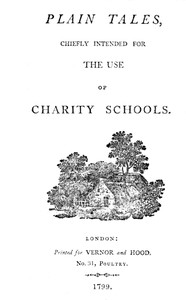
Plain tales, chiefly intended for the use of charity schools by Anonymous
Let's set the scene: England, early 1800s. Charity schools were established to provide a basic education and moral foundation for children from poor families. 'Plain Tales' was created as a textbook for these schools. It's a series of short, straightforward stories, each one a clear parable about virtues like honesty, hard work, piety, and contentment with one's station in life.
The Story
There isn't one plot. Instead, you meet a series of children facing very ordinary temptations. In one tale, young Thomas is sent on an errand with extra change and must decide whether to return it or buy sweets. In another, Mary hears gossip about a kind old woman and has to choose whether to believe it. The stories are simple, almost bare-bones. A child faces a moral choice, makes the right (or sometimes wrong) decision, and faces immediate consequences—often praise from a benefactor or a lesson learned through mild hardship. The language is plain, just as the title promises, designed to be easily understood by young readers.
Why You Should Read It
Don't let the simple style fool you. This book is a historical artifact, and that's what makes it so compelling. You're not just reading stories; you're seeing the direct tools used to instill social values in a bygone era. It's less about literary flair and more about social engineering. Reading it, I was struck by the bluntness of the lessons. The focus is entirely on personal responsibility, deference to authority, and accepting one's lot—ideals meant to create orderly, industrious citizens from the working class. It offers a raw, unfiltered look at the mindset of educational reformers of the time. You get a real sense of what fears and hopes they had for these children.
Final Verdict
This book is perfect for history buffs, especially those interested in social history, education, or Victorian-era culture. It's also a great pick for writers looking to understand how narrative is used to teach morality. If you love classic literature with dense prose and complex plots, this isn't that. But if you're curious about the foundational stories told to generations of children and want to hold a piece of educational history in your hands, 'Plain Tales' is a quiet, thought-provoking gem. It's a reminder that stories have always been used as tools, and this collection shows you the toolbox from a very particular time and place.
This text is dedicated to the public domain. Access is open to everyone around the world.
Margaret Anderson
2 years agoI stumbled upon this title and it manages to explain difficult concepts in plain English. I learned so much from this.
Michelle Hernandez
1 year agoI stumbled upon this title and the depth of research presented here is truly commendable. Definitely a 5-star read.
John Sanchez
6 months agoThis book was worth my time since the storytelling feels authentic and emotionally grounded. I will read more from this author.
Joshua Rodriguez
5 months agoHaving read this twice, the narrative structure is incredibly compelling. Exactly what I needed.



Michael Williams
9 months agoThe methodology used in this work is academically sound.