
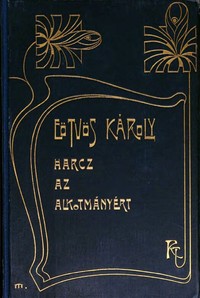
Harcz az alkotmányért by Károly Eötvös
Let's set the scene: Hungary, 1882-83. In the Tiszazug region, a series of mysterious deaths sparks panic. Instead of looking for real causes, authorities round up dozens of villagers—mostly poor, elderly women—and charge them with murder by witchcraft. It's a full-blown modern-day witch hunt.
The Story
The book follows Károly Eötvös, a respected lawyer and politician, as he steps in to defend the accused. He's not just fighting for individuals; he's battling a corrupt local justice system and a government happy to use superstition and fear to control the countryside. Eötvös meticulously picks apart the so-called evidence, which ranges from coerced confessions to outright fantastical claims. The real trial becomes a battle for the soul of Hungarian law. Can the new constitution protect people, or is it just a piece of paper? The narrative builds like a legal thriller as Eötvös exposes one flaw after another, ultimately securing acquittals and revealing the trial as a sham.
Why You Should Read It
This isn't a distant history lesson. It feels urgent. Eötvös writes with the fire of someone who was there, and his passion for justice is contagious. You see the human cost of the accusations—the families torn apart, the lives ruined by hysteria. The most powerful theme is how easily institutions can abandon reason and target the vulnerable when it's convenient. It's a stark reminder that rights need defenders, and those defenders need courage. Eötvös himself becomes a compelling character: a principled man using his skills and status in the best way possible.
Final Verdict
Perfect for readers who love true crime, legal dramas, or political history, but want something beyond the usual Western European or American narratives. It's for anyone who believes a good story can also be an important one. You'll come away shaken by how fragile justice can be, and inspired by the people who choose to fight for it. Think 'To Kill a Mockingbird,' but based on real events in 19th-century Hungary. A gripping and surprisingly relevant read.
You are viewing a work that belongs to the global public domain. Share knowledge freely with the world.
David Moore
3 weeks agoI've gone through the entire material twice now, and the inclusion of diverse viewpoints strengthens the overall narrative. A refreshing and intellectually stimulating read.
Paul Anderson
1 month agoI decided to give this a try based on a colleague's recommendation, the concise summaries at the end of each section are a lifesaver. An excellent example of how quality digital books should be formatted.
Margaret Lee
9 months agoThe layout of the digital version made it easy to start immediately, the logic behind each conclusion is easy to follow and verify. Truly a masterpiece of digital educational material.
Karen Martinez
7 months agoThe clarity of the introduction set high expectations, and the data points used to support the main thesis are quite robust. I feel much more confident in my knowledge after finishing this.

Michael Martin
11 months agoFrom a researcher's perspective, the bibliography and references suggest a high level of research and authority. A rare gem in a sea of mediocre content.