
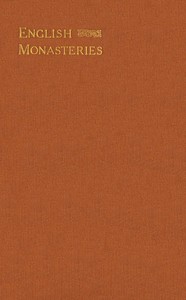
English monasteries : From Saxon days to their dissolution by J. Charles Cox
J. Charles Cox's English Monasteries isn't a novel with a plot, but it tells one of England's biggest stories. The book acts as a complete guide, walking you through the entire life cycle of these incredible institutions.
The Story
Think of it as a biography of a building type. Cox starts at the very beginning, with the first simple communities of Saxon monks who brought Christianity to England. He shows how monasteries grew from wooden chapels into the giant, self-sufficient stone complexes we picture today. You learn how they were organized, what the monks did all day, and how they became centers for farming, learning, and healthcare. Then, the story takes a sharp turn. Cox leads you into the turbulent 1500s, when King Henry VIII broke from the Catholic Church. He details the 'Dissolution'—the systematic closing, stripping, and often destroying of every monastery in the country. The book finishes by showing what happened to the lands and stones afterward, explaining why some became grand houses and others just picturesque ruins.
Why You Should Read It
What makes this old book still worth reading is Cox's obvious passion. He writes like someone pointing out fascinating details on a walk. You get clear explanations of architectural terms, so you'll finally know what a 'refectory' or 'chapter house' was for. But more than that, he makes you feel the scale of the loss. After reading about decades of careful construction and community building, the rapid destruction feels personal and shocking. It helps you understand why those ruins still have such a powerful pull on our imagination. They're not just old rocks; they're the physical evidence of a world that vanished almost overnight.
Final Verdict
This is the perfect book for anyone who loves history, architecture, or just a good story about rise and fall. It's especially great if you enjoy visiting historic sites, as it will make every ruin you see ten times more interesting. Because it was written in 1909, the language is formal in places, but it's not a difficult read. Consider it a classic, reliable companion written by an expert who wanted to share his fascination with everyone. If your curiosity has ever been sparked by a ruined abbey on a hillside, this book will satisfy it completely.
The copyright for this book has expired, making it public property. You can copy, modify, and distribute it freely.
Barbara Johnson
6 months agoI was skeptical about the depth of this book at first, but the footnotes provide extra depth for those who want to dig deeper. It’s hard to find this much value in a single source these days.
Emily Smith
4 months agoFinally found a version that is easy on the eyes.
Sarah Ramirez
1 year agoI didn't expect much, but the character development leaves a lasting impact. A valuable addition to my collection.
Mason Wright
1 year agoUsed this for my thesis, incredibly useful.







Donald Harris
2 years agoI took detailed notes while reading through the chapters and the way it handles controversial points with balance is quite professional. A refreshing and intellectually stimulating read.